The Paid 5-Day Challenge That Converted at 43%: Sarah Williams' Coaching Week Playbook

Membership.io Team
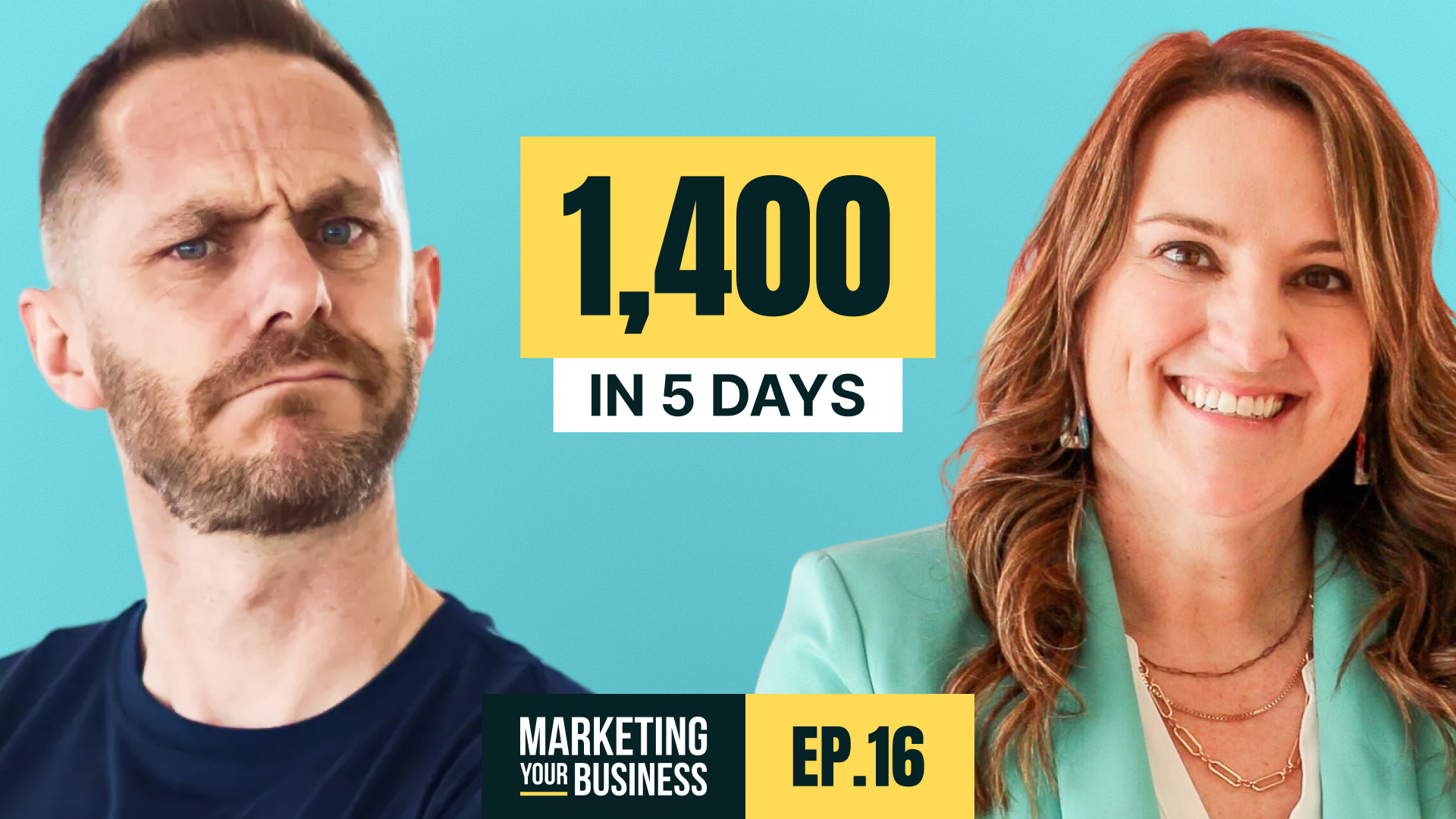
TL;DR: Coaching Week is a paid 5-day launch event Sarah Williams designed to grow her membership from 19 to 1,700 in a single year. Charge $17 at the door, mirror your monthly membership inside the week, sell on Day 1 with a diminishing bonus stack, then open public cart on Friday. Sarah's first run converted at 43% and added 1,400 members in 5 days. The playbook works for subscription boxes, coaching, courses, communities, and service businesses, as long as you treat ads like a casino chip stack and put visibility ahead of everything else.
Most launch advice tells you to run a free 5-day challenge and pitch on Day 5. Sarah Williams charged $17 at the door, sold her membership on Day 1, and converted at 43%. Her first Coaching Week added 1,400 members in 5 days. By the end of that same year, she had gone from 19 founding members to 1,700, and her education business had passed $100,000 a month in revenue.
This is the playbook she used, in her words and ours.
Who is Sarah Williams?
Sarah Williams runs two businesses: a women's subscription box brand (framebysah.com) that grew out of a small-town Texas gift shop, and Launch Your Box (launchyourboxwithsarah.com), the membership where she teaches entrepreneurs how to launch subscription boxes. She joined Stu McLaren's The Membership Experience (formerly TRIBE) program in 2018 and later his Mastermind, which is where the Coaching Week idea was born.
That first-hand membership experience matters, because Coaching Week wasn't designed in a marketing lab. Sarah built it for herself after a year of struggling with 19 members, then tested it live in October 2020. The result was the launch that changed her business.
What is Coaching Week?
Coaching Week is a paid, 5-day launch event where prospective members "hang out" with you for a week, experience what your membership actually feels like, and decide to buy while they're inside it, not after they leave.
Sarah charges $17 to enter. She trains on Day 1, drills down on Day 2, reviews member submissions on Day 3, interviews a member on Day 4, and runs a public Q&A plus open cart on Day 5.
The reason it works isn't the structure. It's that the week is a working model of the membership. Four of Sarah's monthly membership deliverables (a training, a follow-up coaching session, a member spotlight, and a Q&A) get compressed into five days. By the time cart opens, prospects have already lived through the rhythm. They aren't deciding whether to buy a membership. They're deciding whether to keep the one they've already started.
The 5-day breakdown
Here is the week Sarah runs, lifted directly from her own framework. Each block is short on purpose. You can run it.
Sunday night, Day 1: Implementation workshop. Sarah runs her "6 and 60" workshop. Members brainstorm products on sticky notes, then she walks the room through building six months of subscription boxes out of those notes. The point isn't to teach a concept. It's to deliver a quick win, in real time, that gives every attendee an "oh, this is what it would look like for me" moment. Sales-wise, this is the heaviest bonus day.
Tuesday morning, Day 2: Drill-down. Sarah takes the work from Day 1 and shows attendees the next concrete step. She built in a day off in between so people who couldn't attend live had time to catch up. The lighter cadence (every other day, not every single day) is deliberate.
Wednesday, Day 3: Live box reviews. Members mail in twelve subscription boxes. Sarah opens them sight unseen on camera and gives honest feedback. The reviews do double duty: they show what good looks like across niches, and they let prospects see what kind of coach she actually is, without a sales pitch in the room.
Thursday, Day 4: Member interview. Sarah interviews a current Launch Your Box member about their results. Prospects hear the transformation from someone who isn't her, see the reality of being in the membership, and watch their bonus countdown shrink one more day.
Friday, Day 5: Q&A and public cart open. Sarah runs a live Q&A, then opens the public cart. The cart stays open Friday morning through Monday night, an 8-day window total between the start of Coaching Week and cart close. By this point, every committed buyer is already in. The cart open is for the people who needed Friday to decide.
To make this work, Sarah also invites her existing 400 members into Coaching Week for free. Their energy in the chat is the buzz. New attendees ask questions, current members answer, and the community markets itself.
Why should you sell on Day 1 instead of Day 5?
You should sell on Day 1 because that's when the highest percentage of buyers show up, that's when the biggest "aha" moments happen, and that's before week-long drop-off has eaten your audience. Standard launch advice tells you to build trust for five days and pitch at the end. By then, attendance has halved and the people most likely to act have already cooled off.
Sarah's read on it is simple. "I have the highest show-up rate from day one. I also have the highest aha moments from day one. And so I don't want to wait until slowly people are dropping off all week long."
The mechanism that makes "sell on Day 1" work without burning the week is the diminishing bonus stack. Day 1 buyers get every bonus. Day 2 buyers still get bonuses, just a little less. Day 3, less again. By Friday, the public-cart bonus is the smallest, but it's still real. The point isn't to punish people for waiting. It's to give every single day a fresh reason to act.
Sarah introduces the membership before the Day 1 training even starts, in a tone closer to a friendly aside than a pitch: "This week is designed for you to take a peek inside what we do in Launch Your Box. If you already know you want to join, go ahead and sign up now, because you're going to get this bonus, this bonus, this bonus, and this bonus." She mentions it again at the end of the workshop. That's the entire Day 1 pitch.
Should Coaching Week be free or paid?
Coaching Week should be paid, even if the price is small. Sarah charges $17, not because she needs the revenue, but because the price filters out tire-kickers and signals that this is real coaching, not a webinar with a pitch glued to the end. Her ad costs to acquire a $17 buyer are roughly the same as the ad costs to acquire a free lead, but the buyer converts dramatically higher into the $57/month membership.
The reframe she uses with her own audience is the line we recommend you steal: "This is the best $17 you are ever going to spend." Said before the training. Said after the training. Said with conviction, because the workshop genuinely delivers $17 of value in the first hour.
If you're new to launching and haven't yet found your first 50 members, we'd suggest running a founding member launch before you ever attempt a Coaching Week. Sarah's first 19 members came from 50 DMs, not from a paid challenge. Coaching Week is the second-stage growth event, not the cold start.
What conversion rate should a paid 5-day challenge get?
Sarah's first Coaching Week converted at 43%, which is the benchmark we'd point you at. Industry reporting puts paid challenges in a 25-45% conversion range to next-tier offers, versus 2-5% for cold audiences, and notes that online courses sit near 12.6% completion while paid challenges deliver 40-60% active participation. Sarah lives at the top of that band.
The sister case study we keep pointing readers to is Ali Kay, a painter who ran a $10 paid 5-day workshop and added 3,000 new members in one launch week with 95-96% retention. Different niche, same mechanic, comparable result. If a painter and a subscription-box owner are both hitting these numbers, the structure isn't the variable. Your willingness to charge a small fee and sell on Day 1 is.
A note on pricing: Sarah's membership is $57/month, which is in the range we cover in our founding member pricing guide. The $17 challenge price is roughly 30% of the monthly membership price. That's a useful ratio, not a rule.
How does the casino mindset for ad spend work?
The casino mindset is Sarah's mental model for ad spend: walk in with the exact amount of money you're willing to lose, treat the spend as tuition for learning, and make decisions from the chip stack instead of from your bank account. Her actual line, repeated several times in the conversation with Stu: "I'm going to the casino. How much am I willing to lose at the casino?"
The reason this matters is that most creators panic-spend on ads. They run a campaign with money they need, the campaign underperforms in week one, and they kill it before the data is ready. Sarah pre-allocates the experiment budget so that when an ad fails, it doesn't threaten her business. When it works, she scales.
She started at $1,000 a month split across opt-in, video-view, and sales ads. She graduated to $10 a day on an awareness ad for her side-business blow dry bar. She now spends six figures per launch. The progression looks like this:
Phase 1: Start lower-cost. Opt-in ads, video-view ads, engagement ads. These come in cheap and teach you the Meta Ads Manager interface.
Phase 2: Add sales ads at small spend. $200 a day on always-on sales ads is currently netting Sarah 3 to 8 new subscription-box subscribers per day on her e-commerce business. Her quote: "If you could pay me $200 to not have to go live and do the posts today, I would pay you $200." That trade is what scaling ads actually feels like.
Phase 3: Scale on confidence, not hope. Once you know your CPA and your acquisition threshold, the leap from $30/day to $30,000/launch is a confidence problem, not a math problem.
Sarah currently runs three ad types year-round: page-like ads (cheap audience growth), opt-in ads (a free phone wallpaper coming in at ~70 cents per lead, a packaging cheat sheet under $1), and a self-liquidating $17 offer that pays for its own lead cost. Read more on the always-on logic in our piece on growing after your first launch.
The reason the math works for memberships specifically: you're break-even in month one, and Sarah's average member sticks for 17 months. As she put it, "I'd pay $57 for $800 sales." For more on protecting that 17-month window, see our membership retention strategies guide.
What is the visibility-first marketing framework?
Visibility first, conversions second, retention third. That's the hierarchy Stu and Sarah both endorse, and it's the diagnostic Sarah runs every time a Launch Your Box member tells her "nobody is buying my membership." Her response is direct: "It's just because nobody's seeing you. It doesn't mean your thing is wrong."
The order matters. You can't optimize a conversion rate when no one is showing up. You can't optimize retention when you have no one to retain. So the first move in any membership business that feels stuck is to ask, brutally, whether the offer has actually been seen by the right people. If the answer is "not really," you don't need a new funnel. You need a visibility plan.
Sarah's own visibility shift is the proof. She built both businesses on organic content (Facebook Lives, emails, Reels, podcasts, Pinterest, YouTube, everywhere). It worked for years. By 2025 the returns had collapsed. Her quote: "You're going to be watching a blade of grass grow. That's how organic is working right now." She moved her growth engine to paid, and the day-to-day pressure to perform on camera vanished. The organic stayed, but as a content library for new visitors, not as the lead engine. For more on the broader shift, see our membership marketing in 2026 guide.
How do you apply this beyond a subscription box?
Coaching Week is a paid 5-day model that works for any business with a recurring offer at the back end. The proof is the side business Sarah bought: a local blow dry bar with strong customers, zero marketing, and no recurring revenue. She ran $10 a day in awareness ads to her local feed and built three subscription tiers with the franchise's permission. Four months later: 65 subscribers, rent paid by recurring revenue alone, and the salon had grown from one stylist to five because the books were full.
The transferable pieces are the same in every niche:
A small entry fee that filters serious buyers from window-shoppers.
A working preview of the recurring offer, not a teaching curriculum.
A Day 1 sell with diminishing bonuses across the week.
A public cart open at the end for the late deciders.
An ad spend you've already mentally written off, so you can make calm decisions while it runs.
If you're a coach, the week previews your coaching. If you're a course creator, the week previews the course's community and feedback loop, not the lessons. If you run a community, the week is the community at peak energy. The principle Sarah landed on, which we'd build any launch around: prospects don't buy memberships from people who teach well. They buy memberships from people whose membership they've already started living inside. More on that idea in how to sell a membership in 2026.
What can you copy this week?
Three concrete moves you can make before your next launch:
Map your four monthly deliverables onto a 5-day week. If you don't have four, list what you do every month and compress it. Each Coaching Week day should mirror something your members already get.
Build the diminishing bonus stack. Heaviest on Day 1, lightest on the public cart day. Each bonus tied to that day's training. Each one announced before and after you teach.
Set the casino number. Write down the dollar figure you're willing to lose on ads to prove the system works. Treat anything above that as a win.
Then, when you're ready to host the week, run the open cart, and deliver the membership the challenge is selling, you'll want one place to do all of it instead of piecing it together out of a Facebook group the way Sarah did in 2019. That's what Membership.io was built for. If you're earlier in the journey and haven't launched yet, our 5-step launch guide is the place to start.
The line we'll leave you with came from Stu, said to Sarah in the middle of her first big launch when she wanted to close cart early: "Don't go into it. Grow into it." Coaching Week is what growing into it actually looks like.
About the source: This post is built on a recorded conversation between Sarah Williams and Stu McLaren. Sarah is a Alumni of The Membership Experience and Stu McLaren Mastermind member, and her businesses (Launch Your Box and Framed by Sarah) are referenced with her permission. Numbers in this post (43% conversion, 1,400 members in 5 days, 19 to 1,700 in a year, $200/day = 3-8 new subscribers, 17-month average member lifetime, blow dry bar growth from 1 to 5 stylists) are her own, cited from the on-record interview.
Related posts
See more
Over 700 People Paid Carrie Green for What Most Creators Give Away Free
Membership.io Team
October 5, 2026

Attention Spans Hit 7.2 Seconds. This ONE Thing Took Course Completion to 65%.
Membership.io Team
September 28, 2026
Jessi Jean's Yap Challenge: The $7 Million Launch That Started With No Funnel
Membership.io Team
September 17, 2026
Stay in the loop
Don't miss out on our latest news, tip and content! Join our mailing list and get exclusive tips, tricks and the latest insider hacks.