How Emelie Bernborg Gets a 60% Webinar Show-Up Rate and 44% Conversion (Her Exact System)

Membership.io Team
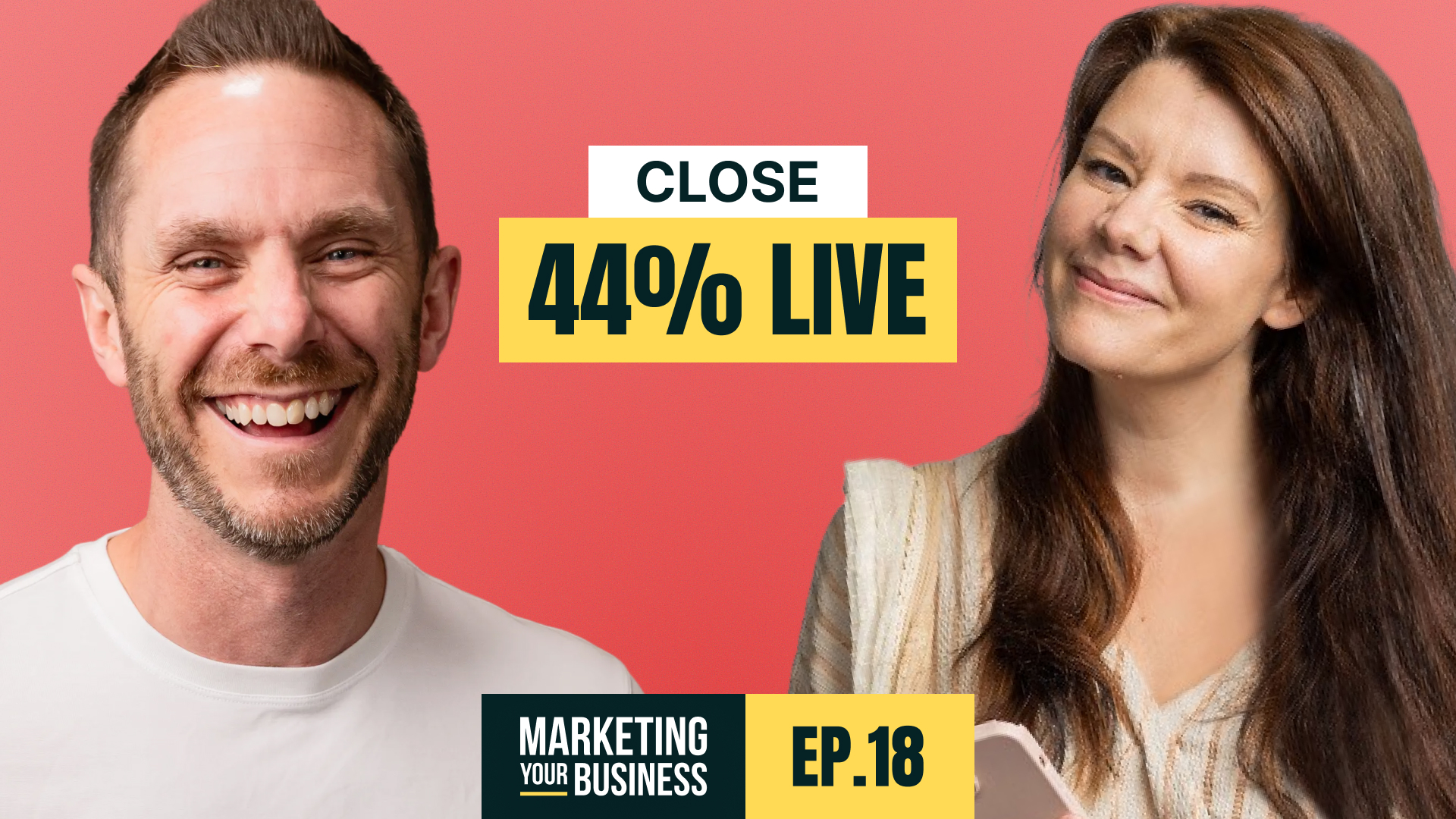
How Emelie Bernborg Gets a 60% Webinar Show-Up Rate and 44% Conversion (Her Exact System)
TL;DR: Emelie Bernborg of Fearless Focus runs webinars with a 60%+ show-up rate (her lowest) and a 44% live conversion rate, and her last campaign turned $3,000 in ad spend into more than $50,000. The system behind those numbers is copyable: a 10-day promo rule that protects attendance, multi-channel reminders that sell the why instead of the date, a strict no-replays-ever policy, and a few quiet delivery tactics that make selling feel like helping. Here's the whole playbook, built for anyone selling a course, coaching, or membership.
The numbers and tactics below come from Emelie Bernborg's appearance on Stu McLaren's Marketing Your Business podcast, where she walked through her live and evergreen webinar system in detail.
Most webinar advice sounds the same. Pick a good time. Send a reminder an hour before. Optimize your landing page. It's the kind of guidance you've read fifteen times and it never moves the needle, because everyone already knows it and almost nobody can show you what actually happened when they ran it.
Emelie Bernborg can. She runs Fearless Focus, and she sells digital offers to people stuck on the launch treadmill, the course creators and membership owners who want something that sells without a frantic open-cart week every quarter. On Stu McLaren's HQ podcast, she laid out the exact system she uses, with real numbers attached. Her worst show-up rate is north of 60%. Her live conversion sits around 44%. Her most recent campaign spent $3,000 on ads and brought back more than $50,000.
A webinar is one stage of a bigger machine, not the whole thing. If you want context on where it fits, this teardown of how Emelie fills, runs, and recycles her webinar doubles as a working blueprint for the sales funnel for your membership. Let's get into it.
What Is a Good Webinar Show-Up Rate?
A good webinar show-up rate is anything above the industry average of roughly 35-45% of registrants attending live. The average attendance rate across industries sits around 51.3%, but most creators land well below that. Emelie Bernborg's floor is 60%, and that's her worst event, which puts her in a different league entirely.
Why does the gap matter so much? Because attendance is where almost every webinar quietly dies. Converting registrants into actual attendees is cited as the single biggest webinar challenge, named by 54.2% of organizers. You can run perfect ads, fill your registration page, and still watch two-thirds of those people vanish on the day.
Emelie's number isn't luck or a giant audience. It's the result of a few deliberate decisions she makes before a single person registers, starting with when she's allowed to promote at all.
How Far in Advance Should You Promote a Webinar?
Promote a webinar no earlier than 10 days before it happens. Emelie Bernborg treats this as a hard rule: she never opens registration sooner than 10 days out. The reason is simple. The longer the gap between sign-up and event, the more life happens, the more enthusiasm fades, and the more people forget they ever registered.
This runs against the instinct to build a long runway. It also lines up with the data. Nearly half of all webinar registrations, 49.6%, happen in the final seven days before the event. People sign up when the thing feels close and real. A six-week countdown mostly collects registrants who'll never show.
The 10-day window does double duty. It concentrates urgency, and it keeps your reminder sequence short enough that people don't tune it out. Which is the next piece, and it's the one most creators get wrong.
What Is the Best Webinar Reminder Sequence?
The best webinar reminder sequence layers multiple channels at three moments: two days before, the morning of, and ten minutes before the event starts. Emelie Bernborg sends reminders through ads, email, and Instagram DMs at each of those points, so a registrant can't open a single app without being nudged toward showing up live.
Most people only think of two of those channels. The third is where Emelie separates herself. She uses ManyChat, the Instagram automation tool, to send broadcast reminders straight to people's DMs. Almost everyone uses ManyChat DM automation on Instagram for one thing only: comment-to-DM lead capture, the "comment GUIDE and I'll send it" move. Emelie flips it. She uses it to broadcast reminders to her registrant list, landing notifications in the one inbox people actually check all day.
The email leg matters too, and not just as a backup. Email drives the majority of webinar registrations, with some studies putting it as high as 86%, so a well-built email reminder sequence is doing heavy lifting on both sign-ups and show-ups. Three channels, three moments, one goal: be impossible to forget.
But sending reminders isn't the trick. What's inside them is.
How Do You Get People to Actually Show Up to a Webinar Live?
Get people to show up live by selling the reason to attend, not the date and time. Emelie Bernborg's reminders never just say "we start at 2pm." Each one makes a fresh case for why missing this event would cost the reader something, hitting four different angles so a different message lands with a different person.
Here are the four angles she rotates through:
Emotional. What does it cost to keep living with the problem you haven't solved? She names the frustration directly.
Hard numbers. She hands the prospect the math and lets them run it themselves. Look at your own profile views, multiply by a small offer price, and the number you get is the case for showing up.
FOMO. There's no replay. If you miss it, you miss it. (More on that next, because it's a whole strategy on its own.)
Identity. This is for people like you, who think and work the way you do.
She wraps social proof around all of it, but framed so the people who feel behind can see themselves in it. Instead of parading her biggest success story, she'll point to someone like "Sandra, who had a tiny following and barely any free time too." The struggler reads that and thinks, that's me, so maybe this works for me. That single framing choice does more for attendance than any countdown timer.
Why Should You Never Offer a Webinar Replay?
Never offer a webinar replay because the moment people know a recording is coming, their reason to attend live disappears. Emelie Bernborg announces up front, clearly and repeatedly, that there will be no replay. Ever. That one promise is a big part of why her show-up rate clears 60% when most creators sit at half that.
It sounds harsh, and it works because it's honest. A replay is a permission slip to skip. Take the permission slip away and "I'll catch it later" stops being an option. This is just urgency applied with a straight face, the same principle behind every real deadline that ever got you to act.
Emelie doesn't leave the people who genuinely couldn't make it hanging, though. The day after, she runs a short, 30-minute session she's careful to call a "summary," not a replay. It hits the key points and carries a fresh bonus that expires in 24 hours. That distinction isn't a technicality. The replay was never promised, so the live event keeps its weight, and the summary becomes a second, time-boxed reason to act rather than a fallback that undercuts the first one.
How Do You Sell on a Webinar Without Being Pushy?
Sell on a webinar without being pushy by handling objections before you ever mention the price and by letting prospects talk themselves into the decision. Emelie Bernborg structures her presentation so that every reason to say no is already answered by the time she makes the offer, which means the pitch feels like a natural next step instead of a hard turn.
A few of her delivery moves are worth copying directly:
Open with warm-up questions. Get people typing in the chat early, so attending feels like a conversation, not a lecture.
Run an engagement contest, but announce the winners at the very end. The top three most active attendees win a small digital gift. Because she only reveals winners after the pitch, people stay to the finish.
Keep the content simple. Overwhelm kills sales. One clear idea beats ten clever ones.
Use yes-framing questions. Instead of telling people it's possible, she asks: "Do you think it's possible to sell 10 mini-products at $27 to cover this?" The prospect does the math and answers yes in their own head. That yes is theirs, not hers.
Say "investment," not "price." Small word, different feeling.
Pause after stating the number. Let it sit. Don't rush to fill the silence.
Add a fast-action bonus that expires about 15 minutes after the pitch. This works for offers under $1,000. For high-ticket, skip it; the pressure reads wrong.
None of this is manipulation. It's structure. The offer only lands well when the audience has already decided the problem is worth solving, and Emelie spends most of the webinar getting them there.
What Is a Good Webinar Conversion Rate?
A good webinar conversion rate beats the roughly 10% of attendees who take the next step on an average webinar. Emelie Bernborg converts about 44% of her live attendees, more than four times the typical rate. A decent webinar conversion rate is around 10% of attendees, so a 44% live conversion is genuinely rare and worth understanding.
Two things drive a number like that. The first is who's in the room. Because Emelie's reminders sell the why and her no-replay policy filters out the half-interested, the people who show up live are already warm and already paying attention. The second is the presentation structure above, where objections are dead before the price ever appears.
High conversion isn't a closing trick at the end. It's the payoff for everything done before the offer.
How Much Should You Spend on Ads to Fill a Webinar?
There's no fixed amount, but Emelie Bernborg's last campaign spent $3,000 on ads and produced more than $50,000 in revenue, a return that comes from creative that doesn't look like advertising. Her ads read as native content: selfie videos, before-and-after screenshots, a simple photo with one bold headline. Scrappy on purpose.
The strategy behind the creative is the same four-angle framework she uses in her reminders: emotional, hard numbers, FOMO, and identity. Different ads pull different people. She also leans into what she calls attract-and-repel, copy that speaks so directly to her ideal buyer that the wrong-fit people scroll past, which keeps her room full of the right ones.
This is the same instinct behind Matt Diamante's scrappy content, the founder who used absurd, native-feeling Instagram hooks to fill a launch before he'd even built the product. Polished ads announce themselves as ads. Content that looks like content gets watched. If your webinar promo looks like a billboard, people treat it like one.
How Do You Turn a Live Webinar Into an Evergreen Funnel?
Turn a live webinar into an evergreen funnel by prerecording the same presentation and running it on an automated schedule with a real deadline attached. Emelie Bernborg takes the exact webinar that already converts live and runs it evergreen with a 24-hour viewing window she doesn't disclose up front, so the urgency feels genuine rather than manufactured.
The mechanics are clean. After the prerecorded session, an "are you ready for the next step?" button sends viewers to a sales page carrying a 20-minute bonus countdown. The whole thing is tracked with Deadline Funnel, which enforces the deadline per person so the offer actually closes when the timer says it does. No fake "this resets every visit" timers. A real window, honored.
This is the difference between a one-time event and an asset. The live webinar proves the presentation works and gives you real conversion data. The evergreen version runs that proven presentation around the clock without you on camera. It's the same logic as a well-built launch your offer system, except the launch never closes.
The One Thing Most Webinar Advice Skips
Here's what gets lost in every "9 ways to boost attendance" listicle: a webinar is only as valuable as the offer sitting behind it. Emelie can convert 44% of a room because what she's selling is worth showing up for, and because her buyers are the kind of people who stick around.
That's the real lesson for anyone running webinars to sell a course, coaching, or program. A 44% conversion into a one-time $200 course is a good day. A 44% conversion into a membership that bills every month, where members stay for a year or more, is a business. The webinar fills the room. The recurring offer is what makes filling it worth doing again next month.
It's also worth being honest about the human side of this, because Emelie is. After two launches that each cleared 200K, she more or less ghosted her own business for months, a textbook upper-limit problem straight out of "The Big Leap." The evergreen system is partly how she came back on her own terms. She now works four to five hours a day with three kids under six. The point of building a machine like this isn't just revenue. It's a business that runs without burning you down.
How Do You Build the Recurring Offer Behind the Webinar?
Build the recurring offer behind the webinar by putting your content and community in one place members pay for every month, then using the webinar to fill it. A high-converting webinar feeds a one-time sale once. Feeding a membership turns that same conversion into revenue that compounds month after month.
This is exactly the gap most creators miss, and it's where what you're actually selling on the webinar matters more than the webinar itself. Membership.io is the dedicated membership platform built by membership owners, with everything you need to start or grow your membership in one place: your content and community, member management, and the offer your webinar points to.
A natural way to fill it for the first time is a founding member launch, where a small first cohort joins at a special rate before everything is fully built. Run Emelie's webinar system to drive registrations, deliver the live event, and send your founding members straight into a Hub that's ready for them. The webinar gets people in the door. The membership is what keeps them, and what keeps paying you.
Ready to build the offer your next webinar deserves? Start your membership on Membership.io and give your audience a reason to stay long after the webinar ends.
Related posts
See more
Laura Phillips Made Six Weeks' Pay in Two Hours
Membership.io Team
October 19, 2026
YouTube for Business: How a Doctor Turned His Channel Into a Book Deal and 11,400 Pre-Orders
Membership.io Team
October 13, 2026
Over 700 People Paid Carrie Green for What Most Creators Give Away Free
Membership.io Team
October 5, 2026
Stay in the loop
Don't miss out on our latest news, tip and content! Join our mailing list and get exclusive tips, tricks and the latest insider hacks.