How to Market Your Online Business: 6 Tactics From a Creator Who Built a Membership

Membership.io Team
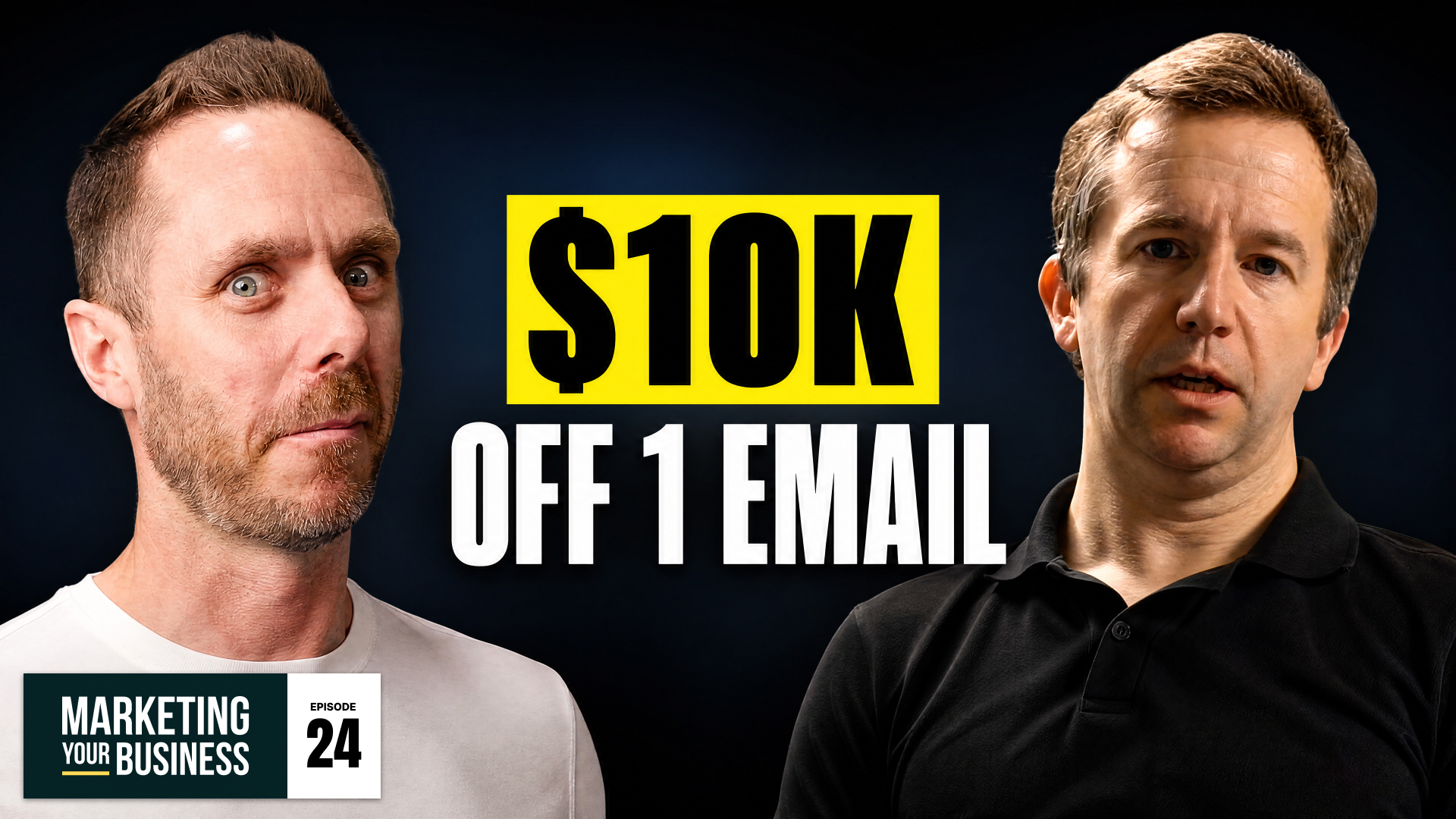
How to Market Your Online Business: 6 Tactics From a Creator Who Built a Membership
TL;DR: The fastest way to market your online business isn't a bigger ad budget. It's borrowing tactics that already work. This playbook breaks down six tested moves from creator Stu McLaren: validate an offer with one email before you build it, add an order bump priced the same as your main product (a third of buyers say yes), steal comedy structures for your copy, lead YouTube videos with a mistake instead of a tip, pay niche creators a flat fee to promote you, and ship faster than you think is reasonable. Every tactic transfers to a course, coaching offer, or membership.
A third of his buyers add a second product at checkout. The second product costs exactly the same as the first one. No discount, no bundle, no "today only" gimmick.
That's just one of the counter-intuitive moves Stu McLaren shared in a recent conversation with Will Hamilton, co-founder of the tennis brand Fuzzy Yellow Balls. The two broke down the exact marketing tactics behind a membership business that's been running since 2007, and almost none of them show up in the usual "how to market your business" advice.
That advice is the same eight tips everywhere. Build a website. Do SEO. Post on social. Start an email list. All true, all generic, and all repeated by banks and software companies that have never actually run a membership.
This is different. Below are six tactics from someone who has spent years marketing a real one. The business happens to sell tennis playbooks, but every move translates directly to a course, a coaching offer, or a membership. Let's get into the playbook.
How do you market an online business with a small budget?
Start by validating demand before you build anything, then borrow audiences and channels you don't have to pay to maintain. The cheapest marketing is the offer you sell with one email, the order bump that adds revenue at checkout, and the niche creator who promotes you for a flat fee. Spend on testing, not on perfection.
You don't need a big budget. You need tested tactics and the willingness to ship fast. That's the whole theme of what follows.
Tactic 1: Sell it before you build it
Want to know if an offer will work? Write the sales email first and see if anyone buys, before you create a single piece of content. If people pay, build it. If they don't, you just saved yourself weeks of work.
Stu did exactly this with a high-ticket in-person experience. He wrote one email describing it, sent it to his list, and people applied at $10,000 a spot before the thing existed. "I don't want to do all this work if nobody wants it," he said. "So I'm just going to write the email and see if people apply." It sold out.
This works because demand is the only validation that matters. Surveys lie. Likes lie. A credit card swipe tells the truth.
It's not theory, either. Membership.io creator Matt Diamante validated demand before building anything and got 319 people to pay with no product and no content ready. Same principle, different niche.
For your business, this means picking your next course, cohort, or tier, writing the pitch as if it already exists, and emailing your list. The responses tell you whether to build it. If your email list isn't set up to do this yet, connecting email to your membership is the first thing to fix.
Tactic 2: Add an order bump priced the same as your main offer
An order bump is a small "yes/no" offer that appears on the checkout page, right before someone pays. Most people make their bump cheaper than the main product. Stu charges the same price as the front-end offer and still gets about a third of buyers to take it.
Why does it work at full price? Because you've already done the hard part. The buyer is sold on the concept, so a related second product needs no new explanation.
Stu describes it as selling someone a glove for one hand, then offering the matching glove for the other hand at checkout. "I've already explained what a glove is," he said. "So I don't have to introduce any new information." His front-end playbook is $67. The order bump is also $67. About one in three buyers say yes.
Most people assume bumps have to be discounted. Stu tested the assumption and found it simply wasn't true. "Everybody discounts," he said. "I just wanted to see what would happen if I charged the same amount."
For a creator, your order bump is your second product at checkout: a companion mini-course next to your main one, a templates pack beside your coaching program, a workbook alongside your membership. Price it at parity and test it. The buyer's already there with their card out.
Tactic 3: Steal comedy structures for your sales copy
Some of the best copywriting techniques come from stand-up comedy. The most powerful one is the broken assumption: you set up a belief your audience holds, then break it. That gap between what they expected and what's true is exactly what makes copy convert (and jokes land).
During lockdown, Stu taught himself joke writing from comedy coach Jerry Corley and realized he'd been using these structures in his marketing for years without naming them. Broken assumption. Compare and contrast. Analogy. Once he could name them, he could use them on purpose.
Here's how the broken assumption plays out in his copy. His audience believes certain things are required to succeed: you have to be a great athlete, you can't have a fast serve if you're short, and so on. "What are the beliefs that people have that are wrong?" he asks. "Then we need to break them down and build them back up."
To find yours, list the assumptions your audience makes about your topic. Use the five W's plus how: who, what, when, where, why, and how. Then ask which of those beliefs is actually false, and lead your copy with that. "This is actually not true. Here are the reasons why, and then here's how you can achieve it."
If those wrong beliefs go unaddressed, they quietly kill the sale. This is why story-first sales copy works so well for high-ticket offers: a story can dismantle a belief in a way a bullet point never will.
Tactic 4: Win YouTube with mistake-based hooks (not tips)
Lead your videos with a mistake, not a tip. Same content, different opening. When Stu took a lesson titled "here's how to serve faster" and reframed it as "here's a mistake people make when serving," then taught the exact same thing, the mistake version did dramatically better.
Why? A tip is optional. A mistake feels urgent, because nobody wants to be the person making it. "I would bet a lot of money that the mistake-based open is going to do better," Stu said.
A few more of his YouTube principles, all transferable:
The first 30 to 60 seconds decide everything. If you lose half your viewers early, watch time drops and the video stops getting shown. Spend most of your effort on the open.
Open loops keep people watching. Pose a question early and don't answer it until the end. Stu sets up "what shot is he about to hit?" and only reveals it in the final seconds.
Put your call to action in the middle, not the end. Once the payoff hits, people leave. So the pitch goes in the middle, right before a thing they want to see.
Long-form is just five shorts strung together. Nail the short structure first, then stack them.
Split-test your titles and thumbnails. One of Stu's titles pulled 50% of watch time on its own. The other two split the rest. You won't guess the winner, so test it.
These retention mechanics mirror the YouTube content strategy Alex Cattoni used to build 400,000 organic subscribers, and the way you show up on camera matters just as much as the words.
Tactic 5: Borrow other people's audiences
No audience yet? Borrow someone else's. In any niche, plenty of creators have engaged audiences but no product to sell them. You pay them a flat fee to feature your offer, and you reach your exact target market without building a following first.
This is Stu's answer to expensive ads. "With influencers in your niche, you don't have to compete against the Coca-Colas or the BMWs," he said. "You only have to be better at selling your product than anybody else in your industry."
Here's the full play:
Find them. Search your niche on YouTube. Look for smaller channels posting consistently, even ones with only a couple thousand views per video.
Pitch simply. Stu's actual opener: "Hey, great content, I really like it. I've got this product. I don't know if you take sponsorships, but if you do, let me know." That's it.
Price with CPM. YouTube pays creators roughly $4 per thousand views. Offer the equivalent of a $15 to $20 CPM and it feels like a windfall to them. In practice, start with a minimum of around $100 to $200 per video, never a $40 offer.
Bundle the deal. Sponsor three to five videos at once. If they push for more, Stu says it's easier to raise a rate later than lower it, so start where you are and scale on performance.
Let them make the ad. It's their channel and their relationship, so give them room to place and frame it however fits their content.
For a membership specifically, this is one of the most reliable ways to find new members without burning cash on ads that get more expensive the harder you push them.
Tactic 6: Speed beats perfection
Ship faster than feels comfortable, because you can't improve what you haven't tested. Stu doesn't script his videos anymore. He outlines the points and records. The goal is reps and feedback, not polish.
When a video flops, he doesn't throw it out. He fixes the one piece that didn't work and reposts. "Nobody saw the last one, so who cares," he said. One of his best-performing videos had a great title and thumbnail but a weak opening, so he can simply reshoot the open and run it again.
The same logic applies to short-form. On platforms that bury old content, Stu reposts winners from a few months back, often the exact same video. Collect your hits and run them again.
His closing advice when asked how to grow a business: "Just do it. It's amazing how much better and faster you get, whether it's business or anything, if you're just out there getting the reps in." Speed compounds. The creator who ships 50 imperfect videos learns more than the one who perfects five.
This is the muscle behind almost everything that makes content spread, and it's why content alone is no longer enough. Selling a membership in 2026 rewards the creators who test and iterate fastest.
Frequently Asked Questions
How do you validate a product idea before you build it?
Write the sales email or sales page as if the product already exists, send it to your audience, and see if people buy or apply. Real money or real applications confirm demand. If nobody responds, you've saved the time you would have spent building something no one wanted.
What is an order bump and why does it work at the same price as the main offer?
An order bump is a small add-on offer shown on the checkout page right before payment. It works at full price because the buyer is already sold on the core concept, so a closely related second product needs no new explanation. About a third of buyers will accept a well-matched bump even at parity pricing.
How do you find and pay influencers to promote your product?
Search your niche on YouTube for smaller channels that post consistently. Send a short message asking if they take sponsorships. Price using CPM logic: offer the equivalent of a $15 to $20 cost per thousand views, with a practical minimum of around $100 to $200 per video, and bundle three to five videos per deal.
Why do mistake-based YouTube titles get more views than tip-based titles?
A mistake-based hook creates urgency and a fear of missing something, while a tip feels optional. The same teaching framed as "the mistake people make" outperforms "here's how to do it" because viewers don't want to be the person making that mistake, so they keep watching to find out.
How do you market an online course when you have no audience yet?
Borrow audiences you don't have. Find niche creators with engaged followings and no competing product, and pay them a flat fee to feature your offer. You reach your exact target market without spending years building a following, and you only have to outsell competitors in your niche, not global advertisers.
Where to Build the Offer, Bump, and Membership
Every tactic here needs a home: a place to host your offer, add the same-price order bump, run the upsell to your membership, and keep your members in one spot. That's exactly what we built Membership.io for. It's the dedicated membership platform made by membership owners, so the offer, the checkout, the content, and the community all live in one place instead of a dozen tools stitched together.
Pick one tactic from this list and test it this week. Write the email before you build. Add a bump at parity. Reframe one video around a mistake. Speed beats perfection, so the best time to start is now. When you're ready to sell from a real home, we're here to help.
Related posts
See more
Laura Phillips Made Six Weeks' Pay in Two Hours
Membership.io Team
October 19, 2026
YouTube for Business: How a Doctor Turned His Channel Into a Book Deal and 11,400 Pre-Orders
Membership.io Team
October 13, 2026
Over 700 People Paid Carrie Green for What Most Creators Give Away Free
Membership.io Team
October 5, 2026
Stay in the loop
Don't miss out on our latest news, tip and content! Join our mailing list and get exclusive tips, tricks and the latest insider hacks.