How The Boutique Hub Built a 7,000-Member Business: A Real Membership Marketing Strategy You Can Copy

Membership.io Team
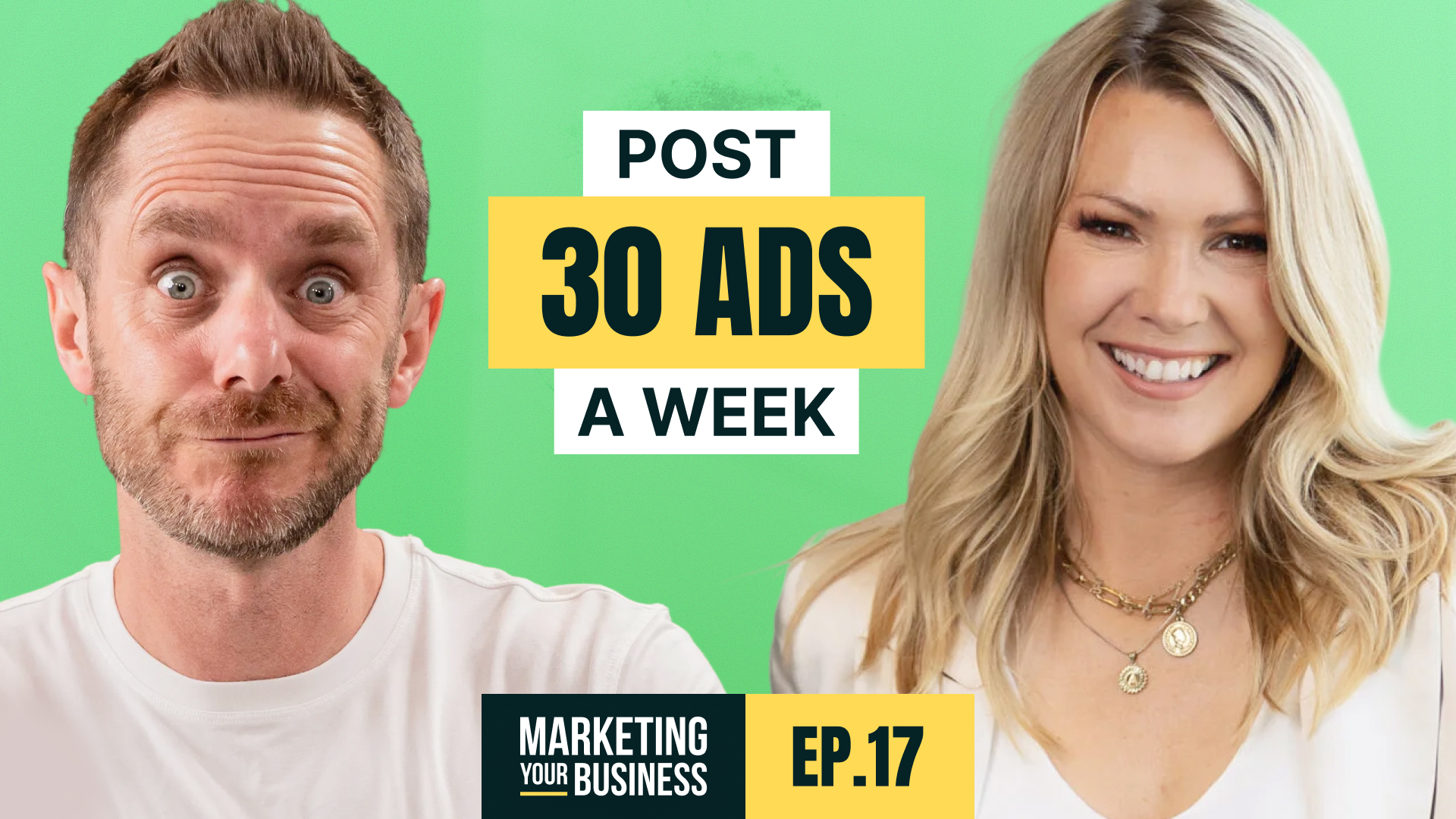
TL;DR: A membership marketing strategy that lasts isn't a list of tactics. It's a set of repeatable systems. Ashley Alderson grew The Boutique Hub to 7,000+ paying members over 14 years by running 30 fresh ad creatives a week, shipping one lead magnet that does double duty (free to non-members, refreshed weekly for members), refusing to paywall things that breed resentment, and giving her community a villain to rally against. Here's the whole operator playbook, translated for any creator, coach, or course builder.
Most articles about membership marketing read like the same recycled checklist. Run a referral program. Add a tier. Send an email drip. The examples are always hypothetical, the advice is always generic, and nobody writing it has actually built the thing.
Ashley Alderson has. She started The Boutique Hub as an online "shopping mall of boutiques," hit a wall, pivoted, and spent the next 14 years growing it into a community of more than 7,000 paying members. Along the way she invented her own marketing holiday, built an AI clone of herself, and figured out exactly how many ad creatives a real business needs to ship every week.
This is her playbook, in her words and ours. Most of it has nothing to do with boutiques.
What is a membership marketing strategy, and why does it beat one-time sales?
A membership marketing strategy is a set of repeatable systems for attracting, converting, and keeping paying members over time, rather than chasing one-off sales. It works better than one-time selling because the revenue compounds. You're not restarting at zero every month. Subscription businesses grow 4.6x faster than the S&P 500 for exactly this reason.
The difference shows up in how you spend your energy. With one-time sales, every launch is a sprint, and the income spikes and crashes. With a membership, you wake up knowing roughly what next month looks like, so you can invest in systems instead of constantly hunting for the next sale.
That stability is why so many coaches and creators are making the move. If you run sessions or programs one client at a time, the math on turning coaching into recurring revenue is hard to argue with. For the full framework behind everything in this post, our membership marketing guide is the companion piece. What follows is the real-world operator version.
What is "community over competition," and how do you build a membership around it?
"Community over competition" means treating the people in your space as collaborators, not threats, because a group of businesses together creates more value than any one alone. Ashley grew up watching it work: a two-store main street where, as she puts it, "wherever two or more businesses come together, you become a destination." That belief became the foundation of her entire membership.
It sounds soft. It's actually a growth engine. When members see each other winning, they share wins, refer friends, and answer each other's questions, which means the community does marketing the founder would otherwise have to do alone. Boutique owners who once saw each other as rivals started sending customers down the street, and the whole town became a place worth driving to.
Translate that to any niche. A fitness coach builds a member community where clients celebrate each other's progress. A course creator runs a group where students troubleshoot for one another. The work is the same: design the membership so members get value from each other, not just from you. That's the heart of how to build a community that markets itself, and it's the cheapest, most durable acquisition channel there is.
How do you get your first members for a paid community?
You get your first members through direct, personal outreach and real-world collaboration, not paid ads. Ashley's earliest growth came from word of mouth, an informal affiliate setup, and showing up in person at wholesale marts and trade shows to partner with brands. Cold-start growth is a people problem before it's a marketing problem.
Her best early move was finding win-win-win collaborations. She'd partner with a wholesale market or a brand so that the market got more foot traffic, the brand got more exposure, and her members got a real benefit. Today that has hardened into trust signals you can see: pink Boutique Hub stickers down the hallways at trade shows, and wholesalers who give Boutique Hub members a 10% discount.
The creator version doesn't require a trade show. It's guest podcast appearances, co-hosted workshops, bundle swaps with someone who serves the same audience, and a small handful of evangelists you personally invite. The mechanic is identical: borrow an existing room full of the right people, and make sure everyone in the deal wins. Those early perks matter too, because the right benefits give people a reason to join long before you have a brand they recognize.
How many ad creatives should you actually run each week?
A lot more than you think. After Meta's "Andromeda" update shifted targeting power to its own AI, Ashley moved from 2 to 3 hand-targeted creatives a week to roughly 30 new creatives a week. The job changed. You no longer hand-tune the audience. You feed the machine volume and variety, and let it find the buyers.
This is the single biggest acquisition shift most ranking articles miss entirely. The old playbook was a few ads with carefully chosen interest targeting. The new reality is that winning Facebook creative fatigues within weeks, and high-performing teams now test 15 to 20+ creatives a week. Ashley sits above that band, on purpose.
Here's how she produces 30 a week without burning out:
A hooks spreadsheet crossed against her 3 core offers, the season, and teachable moments. That matrix generates dozens of angles before anyone films a thing.
Variety on purpose: testimonials, live video, short funny clips, long educational pieces. Different formats catch different buyers.
A content day with a videographer to batch-shoot, so 30 creatives don't mean 30 separate productions.
Double down on winners. Most won't work. The few that do get more budget.
The framework underneath it is hook, story, offer. Grab attention, tell a quick story, make the ask. Whether you're a coach, a course builder, or a maker, the lesson holds: stop agonizing over targeting, and start producing more raw material for the algorithm to test. More on the broader acquisition picture in our guide to selling a membership in 2026.
How much should you spend to start running ads for a membership?
Start at $5 a day. Ashley's advice for anyone intimidated by paid acquisition is to begin small, test, and iterate. You do not need an agency, and you do not need a big budget to learn what works. The early spend is tuition, not a growth lever.
The point of starting small is to learn the interface and read the data without risking money you need. Once a creative proves itself, you scale behind it with confidence instead of hope. Ashley's best buyers, worth noting, come from Facebook rather than Instagram, even though both run the same creatives. Test both, then put your money where the buyers actually convert.
If organic social is more your speed to start, the same content can turn followers into members before you ever spend a dollar.
How do you give away content for free without cannibalizing your membership?
You build one asset that does double duty. The Boutique Hub's Monthly Action Plan, or MAP, is the clearest example of this anywhere. A free version goes out every Friday as a lead magnet that sells the membership. A richer version lives inside the membership as a weekly-refreshed page that keeps members coming back. Same core asset, two jobs.
The production is lean. Ashley's email marketer repurposes the existing membership library and the questions members ask in the Facebook group, runs them through ChatGPT and Canva, and ships the MAP weekly. The free Friday version gives non-members a real, useful taste, which is the best sales pitch there is. The members-only version is tied to seasonality, like a Valentine's focus in February, so it always feels current.
That freshness is the trick. The free content doesn't cannibalize the paid product because the paid version is alive and updated, while the free version is a single snapshot. Done right, email marketing for your membership becomes the bridge that carries free readers into paying members. The Boutique Hub tracks 500 opt-ins a week off this engine, with one new lead magnet shipped every week to keep the top of the funnel full.
For any creator, the takeaway is to stop treating free and paid as separate content factories. Build once, ship the snapshot free, keep the living version behind the door.
How do you keep members from canceling after they "graduate"?
You build a higher tier for people who outgrow the core. The Boutique Hub's classic churn problem was members who finished the education, felt "done," and left. The fix was Boutique Hub Black, an elevated membership built specifically to catch graduates with one-on-one coaching and weekly 15-minute check-ins on their ads and website.
The offer ladder is deliberate. The core membership teaches the fundamentals. Retail Bootcamp, a $2,000 course run twice a year with lifetime access, takes serious members deeper through what Ashley calls her "six layers of lasagna" framework. Then Boutique Hub Black, about two years old, exists to keep the most advanced members engaged instead of graduating out the door.
Notice what this solves. Retention isn't a single bullet point. It's a designed system where every stage has a next step. A 5% increase in retention can boost profits 25 to 95%, so building a tier for graduates isn't a nice-to-have. It's where the profit lives.
Your version might be a mastermind above your membership, a done-with-you tier above a course, or a small high-touch circle for power users. The principle generalizes cleanly across our membership retention strategies: give people somewhere to go before they decide there's nowhere left to grow.
What is the "problems before they're problems" mistake?
It's the trap of manufacturing a fairness problem your members would never have noticed. The Boutique Hub once paywalled its "back issues" so that new members couldn't access older content existing members had paid for. The logic seemed fair. The result was that new members felt nickel-and-dimed before they'd gotten any value, and a few of them said so.
This is the novel system most retention advice never mentions, so sit with it. Ashley removed the paywall, gave every new member full access to everything on join, and braced for complaints from the long-time members whose "exclusive" back issues were now free.
The complaints never came. Existing members didn't care. She had been solving a problem that lived only in her own head, at the direct cost of new-member trust. The lesson for anyone deciding what to include in a membership: don't build friction to protect a fairness concern your members aren't actually having. Give generously on entry, and watch your conversion problem disappear.
Should your brand have a villain, and how do you pick one without being negative?
Yes, your brand should have a villain, because rallying people against a shared enemy is one of the strongest ways to build belonging. The key is that the villain can be a problem or a limiting belief, not just a competitor. Ashley draws this straight from Donald Miller's StoryBrand framework: your member is the hero, you're the guide, and the villain is what stands in their way.
For The Boutique Hub, the villain at one point was Shein and Temu, the fast-fashion giants squeezing independent retailers. Naming that enemy and standing with her community against it created instant solidarity. Ashley's brand voice is "radically honest and vulnerable," and part of that honesty is being willing to say, out loud, what the community is up against.
The mistake creators make is thinking a villain has to be a rival business. It rarely is. For a fitness coach, the villain is diet culture and shame. For a finance creator, it's the myth that you need to be rich to start investing. For a course builder, it's the overwhelm that keeps people stuck. Pick the thing your members are quietly fighting, name it clearly, and position your membership as the guide that helps them win. You're not being negative. You're being honest about what's hard.
What is Pink Friday, and why did a retailer invent her own holiday?
Pink Friday is a marketing holiday Ashley created: the Friday before Black Friday, dedicated to supporting small businesses first. Her reasoning was that Small Business Saturday comes after Black Friday, once shoppers have already spent their money at big-box retailers. So she built a moment that puts small businesses at the front of the line, and it has since grown into a global event and a record sales day for many of her members.
The deeper play is counter-positioning. Instead of competing inside a crowded marketing moment, Ashley invented her own and gave her entire community a reason to mobilize around it. It reinforces the villain (big retail) and the hero (small business owners) in a single annual event that members look forward to and promote on their own.
You can do this in any niche without inventing a national holiday. Create a named challenge week, a signature annual summit, an awareness day for the problem you solve, or a recurring member-only event with its own identity. The point is to own a moment rather than rent space inside someone else's. A moment your community shows up for every year becomes a marketing asset that compounds.
What metrics should you track to grow a membership?
Track the numbers that show whether your content is being seen, saved, and acted on, not just vanity follower counts. The Boutique Hub watches return on ad spend (ROAS), clicks and engagement, saves, shares to story, and opt-ins per week (currently around 500). Those signals tell you whether the top of your funnel is actually working before you ever look at revenue.
Saves and shares to story matter more than likes because they signal that content is useful enough to keep or worth passing to a friend, which is what actually drives new members. Opt-ins per week is the leading indicator for everything downstream. If that number is healthy, sales follow.
Match these to your own funnel, and don't drown in dashboards. Our rundown of membership growth metrics to track covers the full set, but the operator lesson from Ashley is simpler: pick a few leading indicators, watch them weekly, and double down on whatever moves them.
The operating habits that keep it all running
A few smaller moves stitch the playbook together, and they're worth stealing.
Ashley runs on "do what you do best and hire the rest." Her small team plans on Mondays, batches and pre-schedules content across Instagram, Facebook, YouTube, Pinterest, LinkedIn, and TikTok, then reacts and doubles down on what hits. Nothing about the cadence is heroic. It's just consistent.
She also reduced her own key-person risk with what she calls a "Seal Team Six" model: each leadership member develops a "ninja skill" and goes live on camera, so the brand isn't entirely dependent on the founder's face. And she built "Ask Ashley," an AI clone on Delphi trained on 14 years of her content. It voice-clones her, auto-syncs new uploads, and cites the exact lessons its answers come from. Her caveat is the right one: AI is a tool that scales access to your knowledge, but it never replaces authentic human connection. That connection is still what people pay for.
The line she leaves members with, borrowed from a mentor, is worth keeping somewhere visible: "A bad day doesn't make a bad week, a bad week doesn't make a bad month, a bad month doesn't make a bad year, and a bad year will not kill your business if you let it."
Your turn to build the playbook
Strip away the boutiques and Ashley's strategy is a set of systems any membership can run. Feed the algorithm volume and variety. Build one asset that works free and paid. Give generously on entry. Build a tier for the people who outgrow you. Name the villain your members are fighting, and give them a moment to rally around. None of it requires a 14-year head start. It requires picking one of these and starting this week.
If you're ready to put a system like this behind your own community, Membership.io is the dedicated membership platform built by membership owners for memberships. It's everything you need to start or grow your membership in one place, so you can spend your energy on the playbook instead of piecing together tools.
Ashley started with a "shopping mall of boutiques" that didn't quite work. Fourteen years later, 7,000+ members pay to be in the room she built. The difference wasn't a better idea. It was better systems.
Related posts
See more
YouTube for Business: How a Doctor Turned His Channel Into a Book Deal and 11,400 Pre-Orders
Membership.io Team
October 13, 2026
Over 700 People Paid Carrie Green for What Most Creators Give Away Free
Membership.io Team
October 5, 2026

Attention Spans Hit 7.2 Seconds. This ONE Thing Took Course Completion to 65%.
Membership.io Team
September 28, 2026
Stay in the loop
Don't miss out on our latest news, tip and content! Join our mailing list and get exclusive tips, tricks and the latest insider hacks.