They Blew Up a 61-Location Franchise on Purpose. Here's the Evergreen Funnel They Built Instead.

Membership.io Team
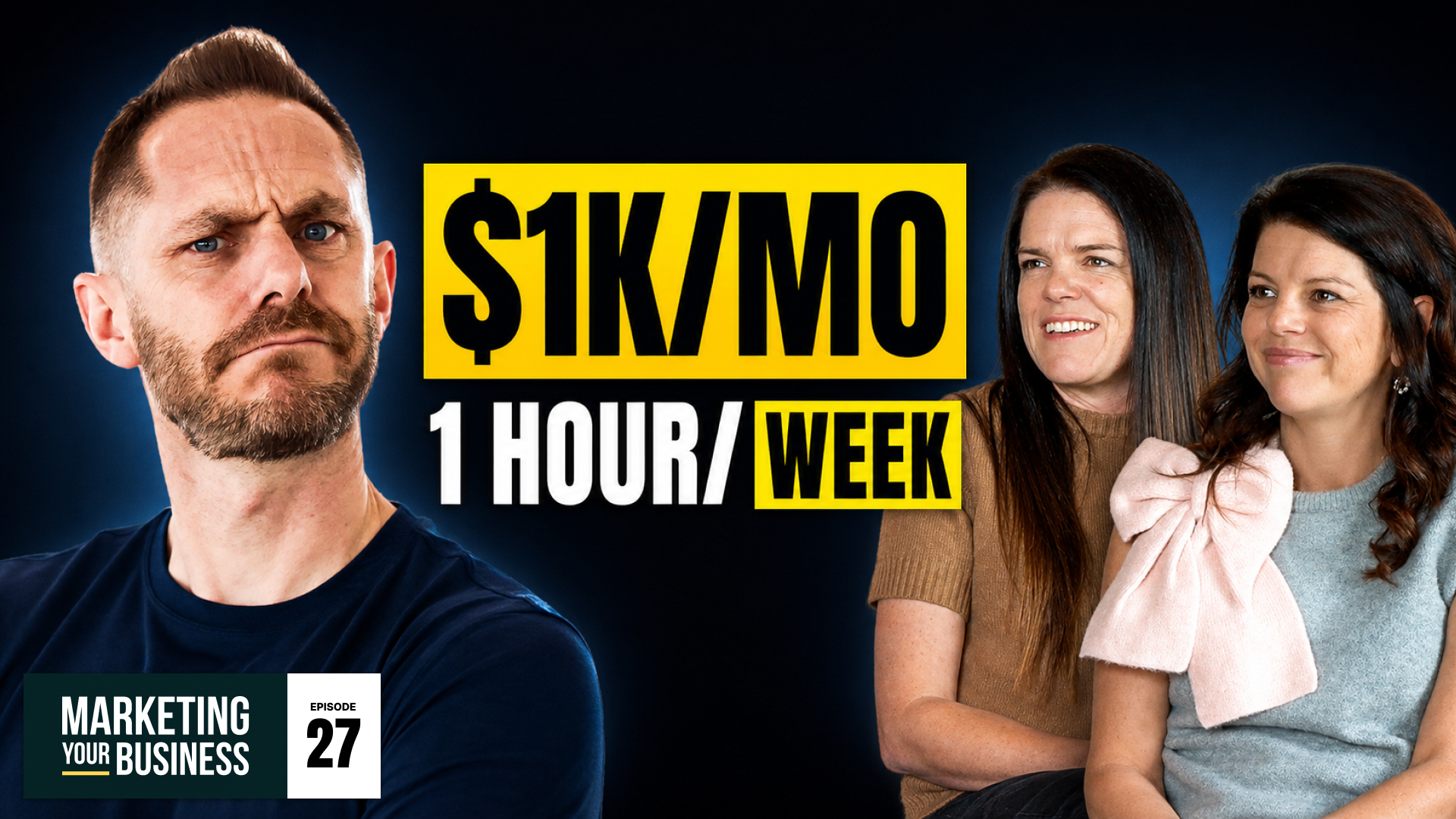
They Blew Up a 61-Location Franchise on Purpose. Here's the Evergreen Funnel They Built Instead.
TL;DR: Christelle Janse van Rensburg and Stefanie De Wet franchised kids' STEM-crafting classes to 61 locations in 3 countries, then de-franchised on purpose.
They rebuilt it as a $27/month membership with a founding-member launch. It now runs in 91 countries.
Their evergreen sales funnel is one free workshop, moved from twice a year to twice a week.
That cut cost per lead in half, and widening ad targeting to include Canada and the UK halved it again.
A $37 VIP upsell with a $10 order bump, converting at 70-80%, cuts ad cost again.
The unit economics: $25 a class, 10 kids, one hour a week, about $1,000 a month.
Christelle Janse van Rensburg and Stefanie De Wet flew 26 hours from South Africa to sit down with Stu McLaren on the Marketing Your Business podcast, and they brought a story most guests don't have: a business that grew fast, then got smaller on purpose. The sisters behind Creative Crafting Club built a 61-location franchise teaching kids STEM crafting, then walked away from franchising entirely and rebuilt the whole thing as a membership now running in 91 countries.
Watch the full episode for the entire conversation, or keep reading for the funnel mechanics behind it.
How did a Thursday-afternoon class turn into a 61-location franchise?
Christelle Janse van Rensburg, an architect dealing with burnout, started teaching kids on Thursday afternoons and built a waitlist. Her sister Stefanie De Wet, an engineer, suggested franchising it over lunch, built a spreadsheet that night, and quit her job the next day. One TV segment brought over 1,000 applications, and the business grew to 61 locations across 3 countries.
"I had complete burnout, and a way to just relieve some of that stress was on a Thursday afternoon," Christelle told Stu on the Marketing Your Business podcast. "I started giving classes to children. I called it mini architecture at the time." Kids built rockets that shot into the air and cars that drove on elastic bands. More kids wanted in, until a mom asked for a lesson plan she could run at her own house, and the idea for franchising was born.
Stefanie remembers it differently, in the way engineers remember things. "I did a spreadsheet that night. Obviously you do a spreadsheet," she said, laughing. "I was so bored with corporate. I really wanted to be an entrepreneur, so when she planted the seed, I quit my job the next day." Christelle's reaction: "I was like, 'Oh, boy.' Because I know my sister."
"We had over a thousand applications during the broadcast," they told Stu, including entries from New Zealand, the US, and elsewhere in Africa. It's a similar leap to what Lane Rebelo made when local, in-person workshops turned into a thriving online membership, just compressed into a single hour of live TV.
Why did they de-franchise a business that was working?
The franchise model gave creative women no creative freedom, since protecting the brand meant sticking to the script. It also created a "boss ladies" dynamic, needed a high upfront buy-in with a long runway, and turned into a logistical nightmare once applications started arriving from outside South Africa.
"These are creative women, teachers, but they don't have any creative freedom, because protecting the brand reputation meant we couldn't give it to them," Christelle explained. Some franchisees started calling them "boss ladies," waiting to be told what to do next instead of owning the business. Then COVID hit. "We went from a big income to zero in one month," they said, and every franchisee looked to them for an answer.
A whiteboard in Stefanie's house filled up with a pros-and-cons list: franchise, online course, or membership. They chose membership, and de-franchised. "Our franchises became our biggest ambassadors," Christelle said. "They got lifetime access, and they're still our biggest ambassadors." No royalty fees, no rigid lesson plans, no permission required to add a personal spin.
Franchise | Membership | |
|---|---|---|
Buy-in | High upfront fee, long runway | Low-cost founding-member price |
Creative control | Locked down to protect the brand | Members add their own spin |
Crossing borders | Different rules in every market | Same sign-up flow everywhere |
The relationship | "Boss ladies" handing down orders | Ongoing support, member owns the result |
It's the same pivot another creator made when a course-based model stopped scaling and recurring revenue took its place: the wrapper changed, but the value underneath didn't.
From 61 locations to a $27-a-month membership
They charged $27 a month to start. "We did a founding member launch," they told Stu, sharing it with the email list built during the franchise years. The price wasn't set in a spreadsheet exercise this time. It evolved as members helped shape what the membership needed to include, a very different process from setting a franchise fee designed to guarantee franchisee profitability.
That founding-member approach is worth studying if you're pricing a launch for the first time. Membership.io's founding member pricing framework covers the same mechanics Christelle and Stefanie used to get their first wave of members in the door before the price climbed.
What is an evergreen sales funnel?
An evergreen sales funnel runs continuously instead of on a launch calendar. Ads, a workshop, an offer, and follow-up emails run every week instead of twice a year, which removes the artificial urgency of a launch window and lets you test and improve the funnel in small increments instead of betting everything on two big pushes a year.
Creative Crafting Club's version starts with one free 60-minute workshop. "All roads lead to our workshop, and then from there we invite them into the membership," they told Stu. Every ad, every social post, and the weekly newsletter points there. It's a sharp contrast to a scheduled, paid five-day workshop launch, which works beautifully for a big annual push but can't run every single week the way this one does.
How did moving the workshop from twice a year to twice a week cut cost per lead in half?
Twice-a-year launches forced a 3-week ad ramp that Facebook's algorithm penalizes, driving cost per lead up fast. Running the same workshop every week instead lets ads stay on indefinitely, and cost per lead dropped to less than half of what it used to be.
For years they ran the workshop twice a year, like most launch-based businesses. "We almost just needed permission to run it more often," Stefanie said, "and we got it the last time we saw you in person, from Ricardo, who did a presentation." That permission turned into twice a week, delivered live 26 times. The training portion is now pre-recorded, with the team live for Q&A, which also solves the time-zone gap: nighttime in the US is daytime in South Africa, so pre-recording means better time slots for everyone.
Stu, who has run his share of scheduled launches, wanted to know exactly what changed under the hood. Widening ad targeting from the northern US to include Canada and the UK halved the cost per lead again. Then a paid upsell inside the funnel halved it a third time. "The risk is so much lower," Stefanie said, "because we get to test it twice a week. We make a tweak, we test it. It's not a train smash" if one cohort underperforms. Building that kind of always-on funnel works the same way webinar funnels built to convert into memberships do.
What does a free workshop need to actually convert?
A workshop that converts needs four things: member story videos so attendees see themselves in someone else's result, a sticky-note challenge that forces attendees to pick one starting point instead of trying everything, a back-of-the-napkin math exercise, and a specific launch date on the calendar before they log off.
The sticky-note exercise exists because attendees show up wanting to do everything at once. "They want to run classes for toddlers, school kids, adults, seniors, parties, online, all the things," Christelle said. The workshop forces one choice, then walks them through launching it with a date already on the calendar.
How do you win back people who don't show up?
Creative Crafting Club turns the workshop's four core secrets into a four-part email sequence, one secret per email, spaced a day apart, written to open a loop rather than close one. Each email points back to registering for the next live workshop, and the sequence ends with a special offer for anyone who worked through all four.
This is brand new, built from a Q&A conversation with Stu about changing consumption habits. "Some people just can't make it to the 60-minute workshop," they said, so instead of writing them off, each email gives a bit of juicy detail from the actual workshop script. It's a close cousin to boosting webinar show-up and conversion rates: different tactic, same instinct to chase the no-shows instead of losing them.
What's a VIP upsell, and how much should you charge for one?
Creative Crafting Club charges $37 for a VIP upsell (workshop replay, everything needed to run a first class, and a supplies directory) plus a $10 order bump (transcript and workbook) that converts at 70-80%. Anyone who joins the paid membership within 48 hours gets the VIP price credited toward it.
"The bump gives them a transcript plus a workbook," they explained. "$10. No brainer." That small front-end revenue is what halves the ad cost a third time, since every VIP sale offsets what the workshop cost to fill. The 48-hour credit removes the "am I paying twice" objection entirely. For your own numbers, this framework for thinking through membership pricing is a good place to start.
How much can you realistically earn running one class a week?
At $25 per class per kid, ten kids in one weekly class works out to $250 a week, or about $1,000 a month, for one hour of teaching. Some members hire instructors and scale it into a full business. Others keep it as a heart project and never charge a cent.
That math played out for Erin, a full-time teacher on maternity leave who joined the CCC academy and pitched 20 schools to start a club. Six said yes. "By the time her maternity leave was up, she had created enough income that she could actually not go back to teaching," they said.
The milestone that wasn't the point
Creative Crafting Club crossed a major revenue milestone this year, the kind of moment Stu said prompted a screenshot he still remembers getting. But when he asked what went through their minds, neither sister led with the number. "The milestone is a bonus," Stefanie said. "The fun we're having, the impact on the women empowered to start their own businesses, and all the kids getting to run these classes, that is the real rush."
The hardest part had nothing to do with funnels. It was identity. "Oh, we do crafts with kids," people say. "That's so cute." Christelle still introduces herself as an architect, even though she hasn't practiced in years, because it's an easier explanation than the truth. Stefanie's best friend warned her, early on, that only 2% of new businesses succeed. Don't leave a good engineering job for this.
They built past it. Members who scale fast now graduate into CCC Masters, a new tier for anyone running more than 40 recurring students a week. "Sounds like golf," Christelle joked when the members named it themselves.
What's their advice for founders who feel stuck?
Never stop experimenting. Christelle and Stefanie once ran seven memberships at the same time and consolidated down once they had enough data to see what actually resonated. Get one mentor and cut out the rest of the noise instead of trying to follow everyone. And when you've done the thinking, just start. Confidence catches up once you're moving.
"Get a community, get support, get one mentor to listen to," Stefanie said. "Cut out all of the noise." Christelle added the other half: "The freedom that we've gotten because of this, anybody can do it, as long as you believe in yourself."
Their shift from launch to evergreen is one version of the always-on funnel Stu McLaren writes about in Predictable Profits. Hear the full conversation, plus every other founder story in the series, on the Marketing Your Business podcast. If their shift from a scheduled launch to a funnel that never turns off has you rethinking your own model, Membership.io is the dedicated membership platform built by membership owners for memberships, the place to build a workshop-to-membership funnel like theirs, minus the 61 franchise locations you'd have to unwind first.
About this post: The Membership.io team covers every episode of Stu McLaren's Marketing Your Business podcast, pulling frameworks worth stealing from the founders who built them. This one comes from Stu's conversation with Christelle Janse van Rensburg and Stefanie De Wet, the sisters behind Creative Crafting Club.
Related posts
See more
Laura Phillips Made Six Weeks' Pay in Two Hours
Membership.io Team
October 19, 2026
YouTube for Business: How a Doctor Turned His Channel Into a Book Deal and 11,400 Pre-Orders
Membership.io Team
October 13, 2026
Over 700 People Paid Carrie Green for What Most Creators Give Away Free
Membership.io Team
October 5, 2026
Stay in the loop
Don't miss out on our latest news, tip and content! Join our mailing list and get exclusive tips, tricks and the latest insider hacks.