Chandler Bolt's $5M Marketing Channel Was Dying... So He Built a $7M One to Replace It

Membership.io Team
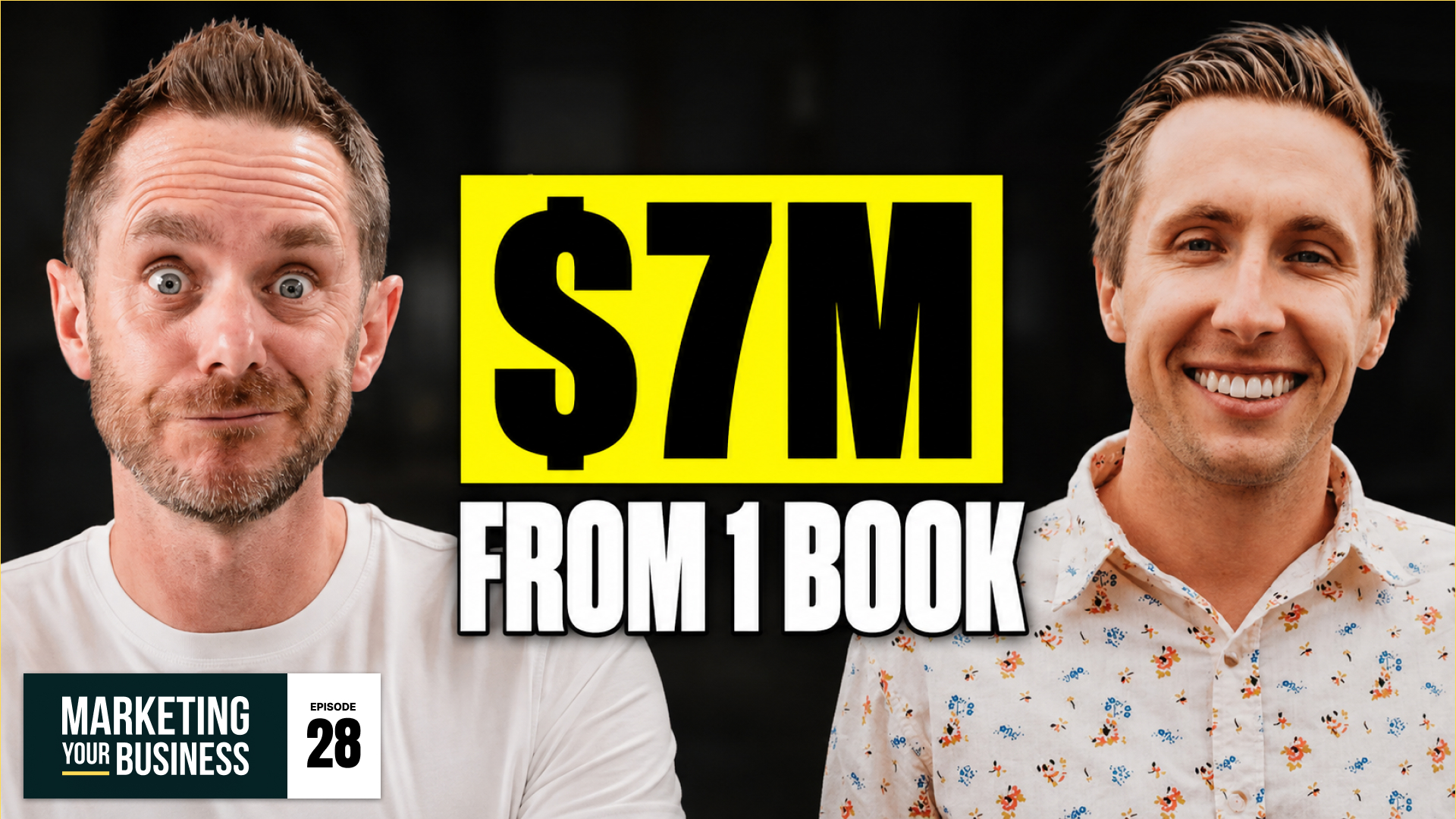
His $5M Marketing Channel Is Dying. He Built a $5-7M One to Replace It.
TL;DR:
SEO and content once brought in roughly $5 million a year for Chandler Bolt's business. It's down 30-50% now that AI Overviews are eating search traffic.
Partnerships, the channel Bolt once walked away from, are projected to bring in $5-7 million this year, making it the company's biggest channel.
His first cohort at selfpublishing.com made $84,000, funded by three affiliates and a Facebook Messenger bot that asked for one thing: a share.
His rule for the ask: request the one thing that matters (the share, the review), and people do the rest without being asked.
The book that started it all now drives about $7 million a year in revenue, because Bolt built it into the business instead of treating it as a side project.
Chandler Bolt dropped out of college as a self-described C-student in English, a guy who "hated reading, hated writing." He went on to build selfpublishing.com into a business that's helped authors publish more than 7,000 books. He's the guest on the August 10 episode of Stu McLaren's Marketing Your Business podcast, and the conversation is worth the full hour, not just this recap.
The channel that used to fund most of Bolt's business is fading, fast. SEO and content once brought in close to $5 million a year for selfpublishing.com. Today it's down 30-50%, and Bolt points to one cause: AI Overviews answering searches before anyone clicks through to a website at all. His response wasn't panic. It was a channel he'd walked away from years earlier, now projected to bring in $5 to $7 million this year: partnership marketing.
"One is the most dangerous number in business," Bolt told Stu. Not because a single channel can't work. Because when it stops working, you're stuck with nothing.
That line is the whole thesis, and it applies whether you're running a coaching program, a craft membership, a wellness practice, or a trade-skills community. Someone out there already has an audience of the exact people you want to reach. Your job is finding them, then asking well.
What Is Partnership Marketing?
Partnership marketing means teaming up with someone who already has an audience of your ideal customers, then building an offer that serves their audience and pays them for the introduction. Instead of buying attention through ads, or slowly earning it through content, you borrow trust someone else already built.
It shows up in a few common forms:
Affiliates, who promote you in exchange for a cut of what they sell.
JV or co-promotion partners, who team up with you on a one-time push, like a summit or a bundle.
Referral partners, who send you customers on an ongoing basis because the relationship benefits both sides.
Bolt's business runs on all three. The through-line is the same: find who already has the "who," and make them an offer worth saying yes to.
How Is Partnership Marketing Different From Affiliate Marketing?
Affiliate marketing covers the mechanics of affiliate marketing: the commission rate, the tracking link, the payout schedule. Partnership marketing is everything that happens before that exists: finding the right person, making the pitch, building an offer worth promoting. Affiliates are one type of partner; partnership marketing is the broader skill of finding and pitching partners of any kind.
How Do You Find the Right Partners for Your Business?
Look for people who already have an audience that overlaps with your ideal customer, then lead with value instead of a pitch. Bolt's first cohort launched with just three affiliates and a Facebook Messenger bot, and it made $84,000 before he had a single result to point to.
Before selfpublishing.com existed, Bolt was teaching people how to publish books out of a mentor's spare room. His first offer was a six-month coaching and membership hybrid, and he was, in his words, super insecure about it. He didn't know how to price it or whether the results would replicate. Filling it took two moves: a Messenger bot that asked his Facebook friends to share a webinar, and three people with existing audiences he approached with no track record: James Schramko, Jaime Tardy, and Hollis Carter. "I was super transparent," he told Stu. "I don't know if this is going to work, but I know I'm going to add a ton of value. Worst case, I do a webinar for your audience and they love you for it. Best case, you make some money too."
The cohort brought in $84,000, split between three business partners, with expenses on top. "I made so little money I didn't even have to file taxes," Bolt said. But 44 students joined, and more than 60% of them published a book within six months, proof the model worked. It's a similar arc to another creator who rebuilt a cohort into recurring revenue: the first paying group rarely funds a business. It funds the evidence that the business works.
What Do You Actually Say When You Ask Someone to Promote You?
Ask for one specific thing, not a list. Bolt's Messenger bot didn't ask friends to register or buy, just to share a webinar link, because he knew the rest would follow. He uses the same rule for book launches: ask for the review, not seven different favors, and people do the other steps anyway.
"We asked for the share, not the registration or anything else, because we knew that was assumed," Bolt said. "And we knew if they shared it, that's where the virality would come from." He applies the identical logic to book launches. "Ask for the review, not for them to do 17 things. Can you share it? Can you read it? Can you buy it? Just ask for the review. Because if you ask for the review, they're going to do the other stuff too. But if you ask them for seven things, they're going to do none of it."
The same principle scales down for a yoga teacher pitching a wellness influencer: one clear ask beats a checklist every time.
What Is a JV (Joint Venture) Partnership, and How Does It Work?
A JV partnership is a short-term collaboration built around one specific promotion, like a summit, a bundle, or a webinar series, where each side brings something (an audience, expertise, a product) and shares the upside. It's less formal than a revenue-share agreement and more structured than a one-off favor.
Bolt describes the whole category simply. "Someone is already talking to your ideal customers," he told Stu. "A bunch of people are. And so it's your job to just find who they are and then put a compelling offer or partnership together that helps serve their audience, and they make money from it." His team calls the whole process their "$30 million partnership blueprint": find the person with the audience, build an offer that serves them, then structure the payout so it's worth their time.
What Happens When Your Best Marketing Channel Stops Working?
You find out how exposed you were. For Bolt, SEO and content once brought in about $5 million a year. It's down 30-50% now that AI Overviews answer searches before anyone clicks through, the exact kind of exposure he warns against.
"SEO and content, we ran that for a really long time," Bolt said. "AI is just eating those SERPs. That's probably down 30%, 50%, maybe more. And at its height, that was probably 5 million a year for us, which is free money, straight from search engine results." The numbers back him up: Ahrefs found a 58% drop in click-through rate for the #1 organic result when an AI Overview appears, up from 34.5% a year earlier, and SparkToro data shows 68% of US Google searches now end without a single click.
"It can be really powerful, but it's also very dangerous, because it's a single point of failure," he said. He's always run what he calls a "portfolio of racehorses," several channels running at once, so when one slows, another is already picking up speed. The same instinct shows up in how Meta ad strategist Brandi Mowles built her business: she split revenue across 1:1 consulting, a membership, and courses instead of betting everything on one offer.
How Long Does It Take for a New Marketing Channel to Pay Off?
Often more than a year, and Bolt treats that as a feature, not a flaw. The slower a channel is to pay off, the harder it is for competitors to copy, which is what happened with SEO years ago and is happening again now as he rebuilds partnerships into a repeatable system.
"Everyone told us when we were going into SEO and content, you're not going to see a dollar for at least a year," Bolt said. "Okay, cool. We're still going to keep investing." That same patience carried over to partnerships. The business started there, on the same relationships that funded that first $84,000 cohort, before Bolt walked away from them. "I'm tired of launches, and I'm tired of affiliates," he said, "because I have to hit my friends up all the time to do stuff for me." What brought him back wasn't nostalgia. It was building a version that didn't depend on him personally. "We finally realized we can build this, and it doesn't have to be dependent on me," he said.
How Much Can Partnership Marketing Realistically Grow a Small Business?
At selfpublishing.com, partnerships went from an $84,000 first cohort funded by three affiliates to a projected $5-7 million this year, tied for the company's largest channel. The growth came from turning one-off favors into a repeatable system, not from any single big break.
One partner-driven promotion did a lot of that early lifting on its own: a virtual summit bringing in the best speakers Bolt could find on becoming an author, in the same spirit as a summit built the same way, roughly doubling the business for the year in a single month.
Every lead, whatever channel it comes from, funnels into the same place. "All roads lead to a sales call," Bolt said, whether the lead comes in through a webinar, a VSL, or a free-plus-shipping funnel built around his book. The book itself is no small side project either. "This book has brought in about $7 million in revenue over the last 12 months," Bolt said, "and it's not because the royalties are ripping. It's because we integrate it into the business." One more channel building on channel, rather than a single silver bullet.
None of this requires a BD team, an agency, or specialized partnership software. It requires finding who already has your "who," the instinct behind Stu McLaren's Success Path idea: locate where your ideal member already spends time, instead of trying to build that audience from zero. Whether that's a peer's newsletter list, a supplier's customer base, or another practitioner's client roster, the audience is already there. The only question is whether you ask well enough to borrow it.
If you're ready to build a version of that program instead of relying on favors, Membership.io's own affiliate program pays 30% recurring commissions, structured the way Bolt eventually structured his own: a system that keeps working whether or not you're the one making the ask that day.
Bolt's full conversation with Stu, including how he bought out a business partner at 21 with money borrowed from his parents' retirement, drops August 10 on the Marketing Your Business podcast.
About this post: The Membership.io team covers every episode of Stu McLaren's Marketing Your Business podcast, pulling frameworks worth stealing from the founders who built them. This one comes from Stu's conversation with Chandler Bolt, founder of selfpublishing.com.
Related posts
See more
Over 700 People Paid Carrie Green for What Most Creators Give Away Free
Membership.io Team
October 5, 2026
Attention Spans Hit 7.2 Seconds. This ONE Thing Took Course Completion to 65%.
Membership.io Team
September 28, 2026
Jessi Jean's Yap Challenge: The $7 Million Launch That Started With No Funnel
Membership.io Team
September 17, 2026
Stay in the loop
Don't miss out on our latest news, tip and content! Join our mailing list and get exclusive tips, tricks and the latest insider hacks.