High Ticket Coaching Funnel: The Call-First Playbook

Membership.io Team
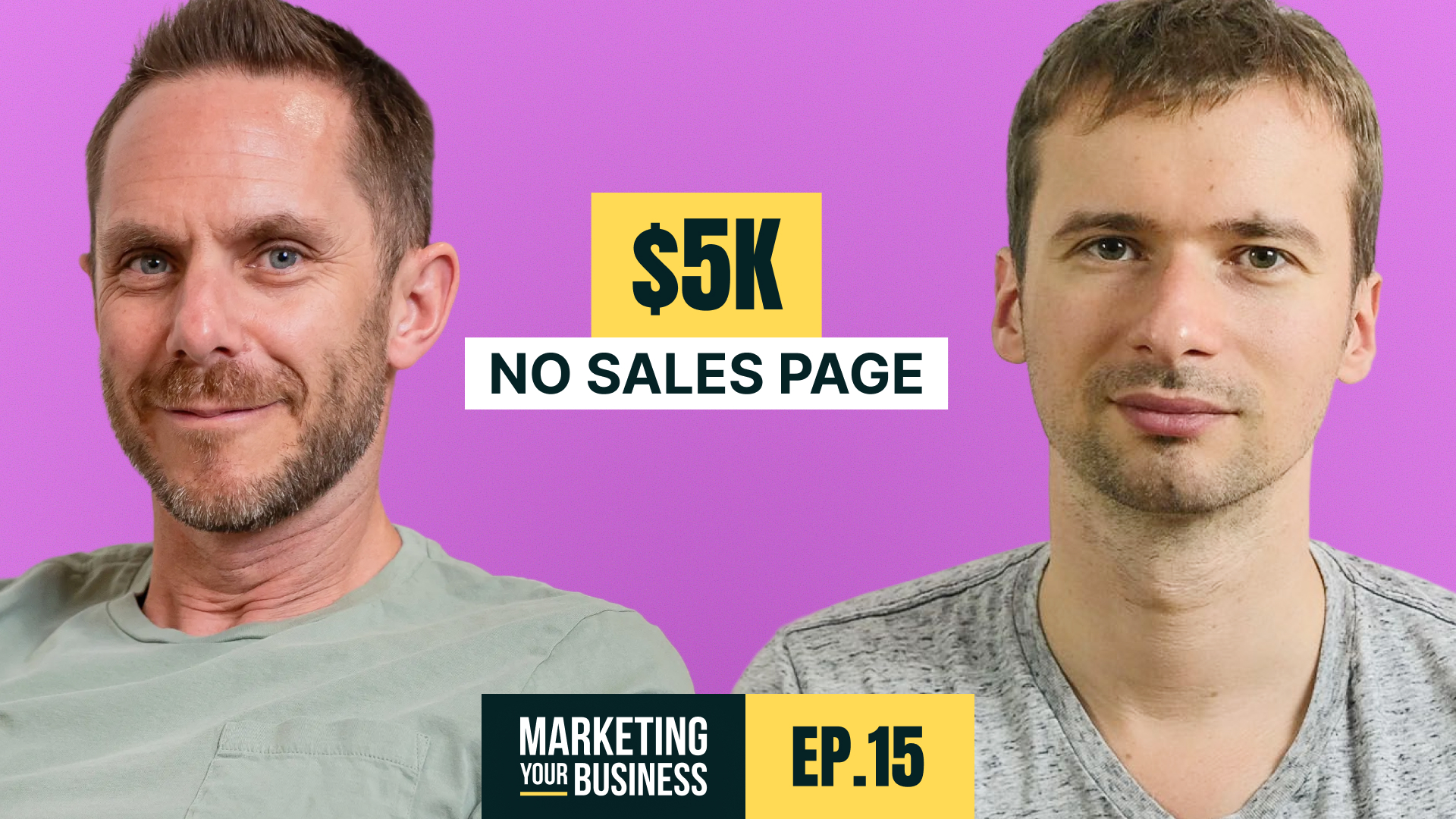
The High Ticket Coaching Funnel: How a 16-Year Launch Veteran Beat His Best Year
Olivier Roland has been running online launches in the French-speaking market for 16 years. Long enough to watch every fashionable funnel format come and go. Long enough to know what a healthy launch chart looks like, and what a slow leak looks like.
For two consecutive years, he was looking at a slow leak.
Same offer, same warm list, same pre-launch content sequence, slightly worse numbers each time. Not collapse. Just decline. The kind of decline that creators talk about quietly at masterminds and dismiss publicly with talk of "the algorithm" or "the economy."
So Olivier did what most creators avoid. He pulled the funnel apart and rebuilt it.
He kept his $2K course as the floor. He stacked a $5-6K coaching upgrade on top. He swapped the "click to join" call to action at the end of his pre-launch videos for a single instruction: "book a call with my team." The next launch beat the previous one. Better still, the people who had already taken a call started telling other prospects, inside the live chat, to do the same.
This is the high ticket coaching funnel that's quietly replacing the old open-cart playbook in 2026. The mechanics are not exotic, but the order of operations matters, and almost every step the average creator copies from a free webinar is wrong.
What Is a High Ticket Coaching Funnel?
A high ticket coaching funnel is a launch and sales structure built around a personal conversation rather than a checkout page. Pre-launch content warms the audience. The call to action invites a 30-minute coaching call with a trained team member, not an instant purchase. The coaching offer (typically $3,000 to $6,000 or higher) is then presented inside that call, with a lower-priced self-study course usually available as a secondary path.
The model trades volume for fit. A buy button sells to anyone who clicks. A booked call only sells to qualified people. At the price points this funnel was built for, that filter is the entire point.
If you have not built a launch funnel before, the foundational mechanics of how a course sales funnel actually works are worth a separate read. This post assumes you have run at least one launch and want to understand why the call CTA is winning right now.
Why Are Course Launches Not Working Like They Used To?
Course launches are not failing. They are softening. Across English and French markets, in business, fitness, art, parenting, and trades, creators who held steady at six- and seven-figure launches for years have watched conversion rates drift down. Average webinar conversion rates have fallen to roughly 2.30% across industries in 2025, and webinar live attendance has continued to slide as the inbox gets noisier.
The cause is not one thing. Buyers are warier. They have seen the same launch arc a hundred times. They have watched cart-close timers tick down on offers they will never buy. Trust takes longer to earn, and the standard three-PLC, five-day cart window is not enough runway anymore for an offer above a thousand dollars.
This is the moment Olivier walked into. As he puts it: "Launches started to go down. It happened with many people in many different industries, many different countries."
Studying the operators in his market who were still growing, he noticed two patterns. The price had moved up, from roughly $2K to $5-6K. And the call to action had moved away from a checkout link, toward a phone call.
The Pivot in One Sentence
Keep the $2K course as the floor. Add a $5-6K coaching upgrade as the ceiling. Replace the "click to join" CTA in your launch with "book a call with my team."
That is the entire shift. Everything else in this post is implementation.
Why $5-6K Cannot Be Sold From an Email
At a $97 price point, the buy button works. At a $497 price point, the buy button still works most of the time. Somewhere between $1,500 and $3,000, friction starts beating intent. Above that, an email link to a checkout page is a fight you lose more often than you win.
Three things change at higher prices. The buyer needs to picture themselves spending the money, which is a different cognitive task than agreeing to spend it. They need a real human to answer the questions a sales page cannot anticipate. And they need permission, the kind that only feels real when another person grants it.
Harvard research found that 95% of purchase decisions are subconscious, shaped by emotion before logic ever shows up. A landing page can deliver information. It struggles to deliver feeling. A conversation can do both.
The numbers reflect this. Sales call conversion ranges from 13% to 25% depending on price point and lead source, with deals under $10K closing closer to the top of that range. Compare that to cold call conversion sitting around 2.35% in 2025, and the picture sharpens. A warm prospect on a real call is a different sport from a warm prospect staring at a checkout page.
Olivier puts it more simply: "It is the best method to sell online, period."
How the "Book a Call" CTA Works Inside a Live Launch
Olivier's launches now run as four live pre-launch sessions instead of pre-recorded videos. The first three end with a single instruction: "book a coaching call with my team." The fourth opens the cart for both options. The course at $2K is still buyable. The coaching package at $5-6K is the focus.
The framing of the call matters more than the technology behind it. Olivier was explicit with his team. He did not want prospects feeling sold to. He wanted them coached.
"I told the team: I want you to coach them. I want them to have more clarity, and I want them to leave the call with a clear action plan of the next steps."
That instruction shaped everything downstream. The booking page promises clarity, not a sales pitch. The intake form gathers context, not budget. The first ten minutes of the call are spent listening, not pitching. By the time the coaching package is mentioned, the prospect has already received something useful, often a piece of insight or a sequencing fix worth more than the call itself.
The result was a behavior Olivier had never seen in a launch before. During the second and third pre-launch sessions, prospects who had already taken a call began posting in the live chat, telling other prospects to book one too.
"It's not a hard sell," they wrote. "Don't worry."
Word-of-mouth inside the launch itself is not a feature you can engineer. It is a byproduct of running a call that does not feel like a call.
Coaching, Not Closing: Why Prospects Start Selling for You
Most sales calls feel like sales calls because the seller treats the call like a finish line. The prospect feels the energy in the first sentence. The shoulders go up. The wallet goes away.
Olivier's team was briefed differently. The call has one job: send the prospect home with a clearer picture of where they are stuck and a concrete next step. The coaching package is offered if the fit is right, framed as the fastest path to that next step. If the fit is not right, the call still ends with the prospect better off than they arrived.
This is the design choice that earns the word-of-mouth. As Olivier said, "I didn't want people to feel they were talking to a used car salesman." The buyers from earlier in the launch had been on those calls themselves. They had felt the difference. So when newer prospects asked, in the live chat, whether the call was just a pitch in disguise, the buyers answered for him.
This is also the moment a creator's instinct often gets in the way. There is a strong pull, especially with a team you have just hired, to script the close, push toward objection handling, and rate calls by booking-to-close ratio. Resist it. The call that earns referrals is the call that gives away enough value that the prospect feels indebted, not pressured. The close happens because the prospect wants to keep the relationship going, not because the seller maneuvered them into a yes.
The work that happens after the call closes matters almost as much as the call itself. Structured member onboarding is what turns a closed buyer into a buyer who finishes the program, refers a friend, and renews when the time comes.
The Two-Tier Offer Architecture
The most overlooked detail in Olivier's pivot is that he did not delete his existing course. He added a tier on top of it.
His $2K self-study course stayed available throughout the launch. A new coaching package, priced at $5K one-time or $6K across installments, became the headline offer. The package included the course plus weekly group coaching calls, a dedicated community space, and monthly missions assigned by a coach. He modeled the structure on what Jeff Walker teaches in his program: the course is the curriculum, the coaching is the accountability and live support layer that gets people to actually finish.
This two-tier shape maps cleanly to what Stu McLaren teaches as the Success Path. The self-study course is the rung for buyers who want the material and will move at their own pace. The coaching package is the higher rung for buyers who need live support, accountability, and a faster timeline. The call is the diagnostic that places the buyer on the right rung, in their own words, with a coach reflecting their situation back to them.
For most creators considering this model, the pricing question is the first sticking point. A practical entry point: the coaching tier should sit at roughly two and a half to three times the course price. Lower than that and it will not feel like a meaningful upgrade. Higher than that and the gap will feel arbitrary unless the live support is significantly differentiated. If you are pricing a recurring tier on the back end, the broader membership pricing strategy guide covers the framework for setting numbers you can defend.
How to Test This Without Building a $5K Service From Scratch
The objection most creators have at this point is real. Building a $5-6K coaching offer from nothing, complete with delivery infrastructure, sales team, and call scripts, is a six-week project most launch calendars cannot absorb.
Olivier's solution is the lesson worth stealing.
"I always like to put my toe in the water before jumping," he said.
He did not build a new service. He resurrected an old one. A coaching group he had run a few years earlier and shelved became the upsell, repackaged with the existing course included. He hired one closer he already knew from the industry as head of sales, who recruited a small team. The coaching content already existed. The sales team was a single trusted hire. Total time to operational: weeks, not quarters.
The same instinct works for almost any creator with a back catalog. A workshop that ran once. A small group cohort that you stopped offering because it ate your calendar. A done-with-you sprint you piloted with five clients. Anything you have built before, served clients with, and have receipts on. Repackage it as the coaching tier. Use the launch to validate demand. If the demand is real, then you build the long-term version with a clearer specification.
This is also where the 12-week pre-launch runway approach Bonnie Christine uses becomes useful. A longer warming period in front of the launch makes the call CTA easier, because more of the audience is already invested in your work by the time the booking link appears.
What to Measure
A high ticket coaching funnel is not graded on the same dashboard as a buy-button launch. The numbers that matter shift.
Watch four metrics across the launch:
The booking rate (the percentage of pre-launch attendees who book a call) tells you whether the offer framing inside the PLCs is working. Below 3% suggests the call positioning is too vague, or your audience is not warm enough to take the leap.
The show-up rate (the percentage of booked calls that actually happen) tells you whether your reminder sequence is doing its job. A 70% show rate is healthy. Below 50% means the call feels expendable to bookers, often because the booking page over-promises and under-clarifies.
The call-to-close rate (the percentage of calls that become buyers) is the gold-standard metric. Sales call conversion benchmarks for deals under $10K cluster around 25%. If you are well below that on a warm audience, the issue is almost always the call quality, not the offer.
Average order value is the variable the whole model exists to lift. Compare AOV against your last buy-button launch. If the new structure is doing its job, AOV will be meaningfully higher even if total unit volume is lower.
Total launch revenue is the final scoreboard. Olivier's was higher than the previous year for the first time in two years, despite a smaller list of buyers. The math worked because each buyer was worth two to three times more.
When This Model Doesn't Make Sense
A high ticket coaching funnel is a precision tool. It is not a default replacement for every launch.
Skip this model if your offer is under $1,500, your audience is mostly cold or freshly built, or you cannot personally or operationally support live calls during the launch window. A solo creator running a launch alongside a full client load will create more pressure than the model relieves.
The funnel earns its complexity when the offer is genuinely high-touch, the buyer profile would benefit from coaching beyond the course material, and there is real capacity to deliver the call experience the model depends on. Within those constraints, it is the most reliable way to lift launch revenue without changing your audience or your topic.
After the Launch: Turning a $5K Coaching Block Into Recurring Revenue
The hard part of any launch is what happens the week after.
A $5-6K coaching tier solved Olivier's launch problem. It also created a new one: every coaching cohort has a finish line, and a finish line means the revenue resets. The launch chart spikes, then flattens, then waits for the next launch.
The version of this funnel that compounds instead of resetting routes the back end into a recurring membership. The coaching package becomes the entry point. After the initial cohort completes, members move into an ongoing membership that continues the live coaching, the community, and the evolving content for a recurring monthly or annual fee.
This is what turning coaching expertise into recurring monthly membership income looks like in practice. The launch closes a high-ticket buyer at $5K. The membership keeps that relationship producing revenue for years. Olivier himself notes that some of his buyers had been following him for ten years before they bought. The membership is the structure that keeps those slow-cooking relationships warm without demanding a launch every quarter.
The same logic applies to the buyers who choose the $2K course only. They finish the curriculum. The natural next step is continued live access at a lower recurring price, which is often where adding a recurring back-end after your course launch becomes the highest-ROI move a creator makes in the year following a launch.
A reminder Olivier offered, almost in passing, that is worth ending on: "You're creating your customers in the future."
A launch is not a transaction. It is a relationship checkpoint. The funnel above is built to make that checkpoint productive at a higher price than the buy button can carry, with a call experience the buyer would actually recommend, and a back end that compounds the work instead of starting it over every quarter.
Build the Funnel That Outlasts the Launch
A high ticket coaching funnel is a better launch mechanism. A membership is what makes the launch worth running in the first place. Membership.io is the dedicated membership platform built by membership owners for memberships, designed for exactly this motion: launch on the front, recurring revenue on the back, content and community forever home in the middle.
If you are ready to make your next launch the start of a longer story, start a free trial at Membership.io.
FAQ
What is a high ticket coaching funnel?
A high ticket coaching funnel is a launch and sales structure that uses pre-launch content to warm an audience, then invites prospects to book a coaching call instead of clicking a buy button. The higher-priced offer, usually $3,000 to $6,000 or more, is presented during that call, with a lower-priced course often kept available as a secondary path.
Why are course launches declining for so many creators?
Course launches are declining because buyer trust takes longer to earn now, inboxes are noisier, and the typical three-PLC, five-day cart window is not enough runway for offers above a thousand dollars. Webinar conversion has settled around 2.30% in 2025, and direct-to-checkout CTAs lose more battles than they win at higher price points. Replacing the buy button with a coaching call is the most reliable fix.
Can you keep selling a $2K course while adding a $5K coaching upsell?
Yes, and you should. Olivier Roland's working model keeps the $2K self-study course available throughout the launch, while positioning the $5-6K coaching package as the headline offer during the pre-launch sequence. Some buyers will choose the course directly. The coaching tier is what lifts average order value and total launch revenue.
How do you sell high-ticket coaching without being pushy?
You sell high-ticket coaching without being pushy by briefing the call team to coach, not close. The prospect should leave the call with more clarity and a concrete next step regardless of whether they buy. When the call is genuinely useful, prospects from earlier in the launch start recommending the call to other prospects, often inside the live chat. That is the signal the experience is right.
What should the coaching package include when building it from scratch?
At minimum, the coaching package should include the existing course plus weekly or biweekly group coaching calls, a dedicated community space, and a monthly accountability mission tied to the curriculum. Olivier modeled his on Jeff Walker's launch structure. The simpler version is to repackage a coaching group, workshop, or done-with-you sprint that has already run successfully, then formalize it after the launch validates demand.
Related posts
See more
Laura Phillips Made Six Weeks' Pay in Two Hours
Membership.io Team
October 19, 2026
YouTube for Business: How a Doctor Turned His Channel Into a Book Deal and 11,400 Pre-Orders
Membership.io Team
October 13, 2026
Over 700 People Paid Carrie Green for What Most Creators Give Away Free
Membership.io Team
October 5, 2026
Stay in the loop
Don't miss out on our latest news, tip and content! Join our mailing list and get exclusive tips, tricks and the latest insider hacks.