How to Sell on Instagram DMs Like a Human (The High-Ticket System)

Membership.io Team
How to Sell on Instagram DMs Like a Human (The High-Ticket System)
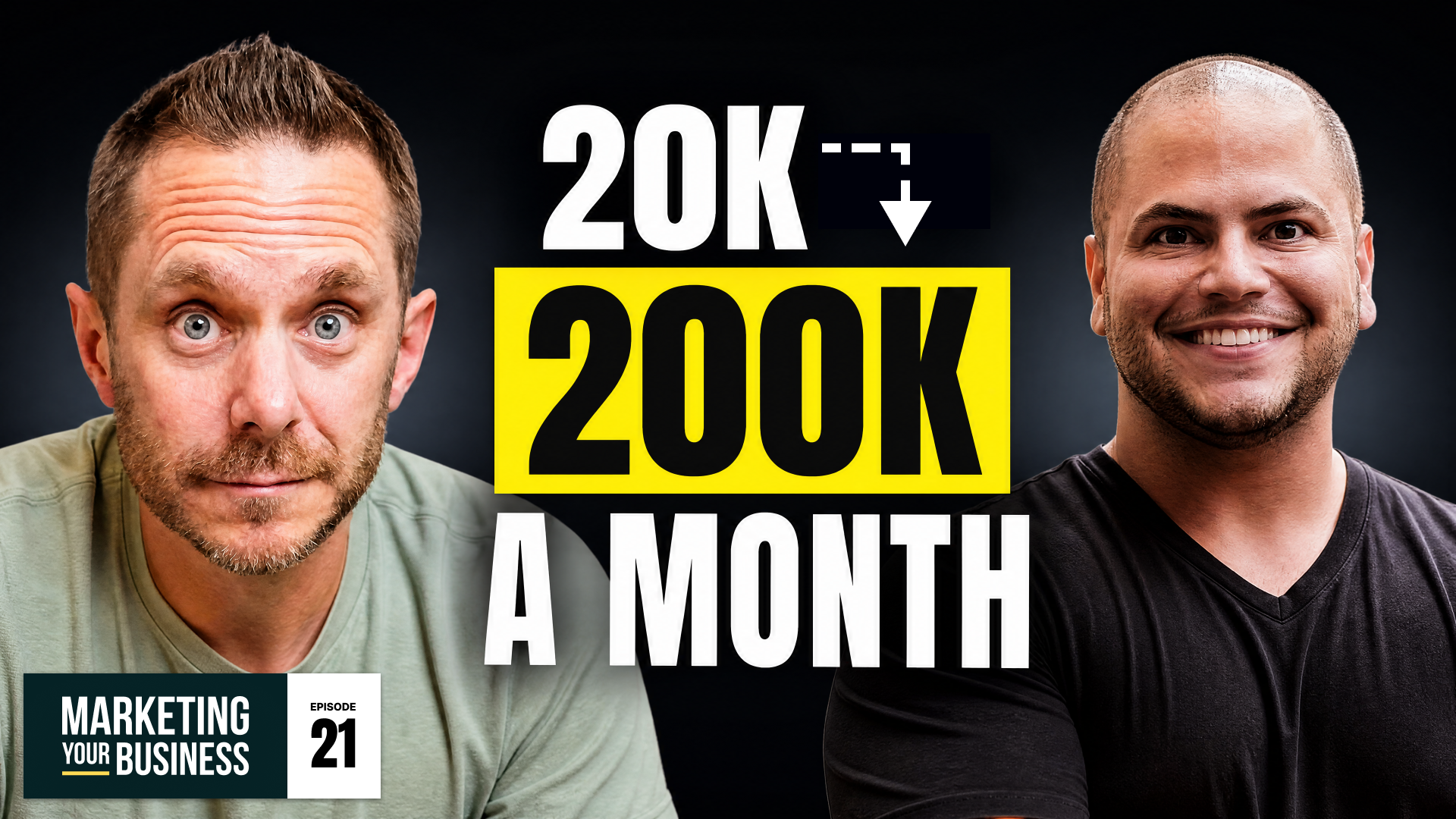
TL;DR: To sell on Instagram without sounding salesy, especially high-ticket offers, lead with your highest offer first and only downsell to a lower-ticket option (or membership) on a no. Reach out the moment someone follows, qualify by their profile signals, open with a personal audio message, and move the right people to a short selection call (not a sales pitch). Brazilian entrepreneur Victor Damasio used this exact flip to go from $20k to $200k per month and grow a business from under $1M to $4M in two years.
Most advice about selling in Instagram DMs reads like it was written by someone who has never actually sent one. It rushes you toward automation, scripts, and AI bots before you have ever had a real conversation. Victor Damasio did the opposite, and it built him a business doing $200,000 a month.
Victor is a Brazilian entrepreneur and former lawyer who has spent ten-plus years running a membership and high-ticket coaching business. He grew it from under $1 million to $4 million in two years, roughly a 5x jump, by changing one thing about how he sells. He has 2,700-plus members in his Brazilian membership, more than 300 high-ticket clients paying roughly $10k to $20k, and over 600,000 Instagram followers. The system below is his, in his own words where it counts.
It works whether you coach, teach an instrument, run a fitness program, train tradespeople, or sell creative work. The mechanic is the same. Only the details change.
What is a value-ladder flip, and why offer the high-ticket first?
A value-ladder flip means you offer your highest-ticket program first, then downsell to a lower-ticket option only if the person says no. Most businesses do the reverse: hook people with something cheap, then try to upgrade them later. Victor flipped it and 10x'd his revenue. Leading with the premium offer qualifies buyers fast and stops you from undervaluing yourself.
For years, Victor led with his low-ticket membership and tried to climb people up to his mentorship and mastermind. Then he turned it around. "Whenever someone reaches out to me on Instagram, I offer them my highest-ticket offer first," he says. "And if they say no, because they don't know me enough, they don't trust me enough yet, then I offer the low ticket."
The numbers tell the story. He went from at least $20,000 a month to $200,000 a month. "In 2021 we did $4 million," he says. "Two years earlier, in 2019, we were doing less than 1 million." That is the core idea behind a strong membership model: the low-ticket offer is not the front door anymore. It is the safety net for people who are not ready yet.
A baker selling a high-end production course can lead with the $4,000 intensive and offer the $30/month recipe membership only on a no. A bookkeeper can lead with the advisory package and downsell the templates library. The point is to stop assuming people want the cheap thing first.
When is the right moment to DM a new Instagram follower?
The right moment is the instant someone follows you. Victor calls it the "magic moment of the follow." Someone saw your content, liked it, saw more, and then made a deliberate choice to keep seeing it. That decision is the highest-probability moment for a real connection, so that is when you reach out, before the attention fades.
Think about what a follow actually is. "Take a look at this word, follow," Victor says. "Wherever this guy is going, I'm kind of going together. So let me just see what he's doing. On that very moment, this is the highest probability of a connection."
He treats Instagram like a storefront. "If you have a physical store and someone walks in, people say, welcome, do you need some help? If you don't do this, you're losing money. Instagram, it's my store." When you wait days to reach out, you are letting a warm visitor wander back out the door.
How do you qualify Instagram followers before reaching out?
You qualify by reading profile signals, not anything personal about the follower. Victor scans new followers for buying intent: a verified badge, a link in bio, an active Stories presence, a healthy follower count, and consistent posting. These signals tell you whether someone is serious about their own business and likely to be a fit, before you spend a minute on them.
Victor is blunt that he does not message everyone. With 600,000 followers in Brazil, he cannot. So he opens his followers list (tap your profile, tap followers, and they appear newest-first) and looks for evidence that the person is building something.
One new follower had six posts, no link in bio, no Stories, and no verification. "There are no chances I'm selling to her," he says. Another had 28,000 followers, a verified profile, a link in bio, a YouTube channel, and over 1,500 posts. "He wants to do something with his profile. He's trying. That other girl, she's not even trying."
To be clear, this is not about how someone looks. It is about what their profile shows. A verified badge costs a few dollars a month, so paying for it signals they take their presence seriously. This is the same reason a small, engaged audience beats a big one: you are filtering for fit and intent, not volume.
What should you say in the first DM to a new follower?
Send a personal audio message, not text, and ask one simple question: "Are you here for the content, or do you want help scaling your online business?" The audio makes it unmistakably human, the question instantly segments browsers from buyers, and it feels like a welcome rather than a pitch. People reply because someone they admire just reached out personally.
Victor borrowed the question concept from Taki Moore and Dan Martell, then added his own twist. "I put the special sauce of the audio message," he says. The effect is striking. "Some of them say, Victor, your AI is amazing. And I say, dude, it's not AI, it's just me. The other thing that happens is people feel welcomed."
That human signal matters more every month. You now live in a world where a thoughtful personal message gets met with "is this a bot?" The audio cuts through that instantly. If someone says they want help, Victor simply asks how they are doing and what their revenue is, then points them to the right offer. No script gymnastics. Just a real conversation that helps you turn Instagram followers into members and clients.
What are the four application questions that reverse polarity?
Once a qualified follower says yes, Victor sends them to an application built on four questions he learned from Andre at Parabellum. He has sold more than $20 million using them. They flip the dynamic so the prospect works to get in, instead of you working to convince them. Here they are, verbatim:
Why do you think this program is the right fit for you? They start selling the program to themselves.
Why do you think you're the right fit for the program? They start selling themselves to you.
The price is X. Can you afford it right now? The price is shown up front, on purpose.
If I take you in, what must have happened by the end for it to be worth it? This surfaces expectations so you can spot anyone who is unrealistic.
The word "apply" does real work here. "When you say apply, you reverse polarity," Victor explains. "Most of the time someone's trying to sell something. When you reverse polarity, you make them try hard to work with you. And it's not fake. If they're not the right fit, you don't take them."
Showing the price in question three is deliberate and a little contrarian. Plenty of coaches hide the price and run a one-hour call to build desire first. Victor thinks that wastes everyone's time. "If you want to buy a MacBook, you know the price. Why do coaches hide the price like it's a surprise? I say the price up front." The people who say no to the price can still be nurtured for later. The people who say yes are ready now.
Question four protects the experience. "Some people are coachable, they can afford it, but they're delusional about the results," he says. If someone expects to 10x in a month, that is a red flag worth catching before they join.
Should you close high-ticket sales in the DMs or move to a call?
Move qualified applicants to a short call, but treat it as a selection call, not a sales call. Victor spends about 20 minutes going back through the four application questions, mostly to feel the person's energy and confirm fit. He is not breaking objections or pushing for a yes. He is deciding whether to let them in. That reframe removes the pressure for both sides.
"It's a selection call, it's not a sales call," he says. "If you hate being on the phone, it's because you were taught a different way. This is just you filtering, seeing if you like them or not. If it starts being like a sales call, step back and remember: I'm just vetting, I'm just allowing them in or not."
He tells applicants directly: "You don't even need to answer exactly as you did on the form. I read your answers. I just want to feel your energy." For anyone resistant to hopping on a call, his answer is sharp: this person may be in your world for six months, a year, or longer. "I have clients for more than 10 years. If I'm not eager to talk for 20 minutes to see if they're the right fit, maybe I'm not in the right business." This is the same care that goes into how to present a high-ticket offer anywhere it shows up.
Should you pay your sales gatekeeper a commission or a flat wage?
Pay a flat wage, not commission, for the role that says yes or no to high-ticket fit. Victor pays his gatekeeper zero commission on purpose. If she earned money every time she approved someone, she would be tempted to approve the wrong people. A flat wage keeps her loyal to the quality of the group, not to closing the deal. This is one of the most overlooked decisions in high-ticket selling.
"Do you know how much I pay my closer? Zero. She's not a closer, she's a gatekeeper," Victor says. "If she's incentivized by being paid when she says yes, wouldn't she maybe say yes to someone who should be a no?"
He does use commissioned closers, but only for the lower-ticket programs and for the people who get downsold after a no. For the high-ticket yes, there is no commission, because it is not a sale. It is an approval. "On a high-ticket offer, the only way you can mess it up is by getting the wrong people in," he says. Protecting the room is worth more than any single deal.
Do you need automation like ManyChat to sell in Instagram DMs?
No, and starting with automation is a mistake. Victor built his entire system through hundreds of real DM conversations first, then automated what was already working. Automation only copies a process. If the process is not proven, you are just scaling something that does not convert. Talk to real people until you know exactly what works, then hand that to the software.
This is the counter-thesis to almost every "sell in DMs" guide online, which tells you to set up AI and ManyChat on day one. Victor flatly disagrees. "People are fancy about automations, but you need to automate something that's working. I see people spending a lot of time trying to find the right automation before talking to real people."
He had already had hundreds of conversations before ManyChat existed for him. "I had to work on the real conversations so I could automate them. I just created an automation that does the same thing." The same principle shows up in how Matt Diamante grew his audience: trust matters more than a finished product. Get the human part right, then let tools carry the volume. This is also how you reliably find new members without burning out.
Why does a membership matter if high-ticket is where the money is?
Because your membership is where future high-ticket buyers grow up. Victor's biggest regret is letting his low-ticket membership "die" while he chased high-ticket revenue. Members who stay engaged eventually become ready for your premium offer. A membership is long-term nurture: it keeps people in your world, building trust, until the day they level up. Neglecting it costs you tomorrow's best clients.
When the high-ticket side took off, Victor admits he stopped pouring into the membership. "I'm guilty," he says. By the time he had 2,700 people in the group, more than 300 had already moved up to the higher tickets, and the lower-ticket membership, in his words, "started dying." Where his focus went, his energy went, and it wasn't there.
His verdict is honest. "If I could go back, I wouldn't change the strategy. I'd still focus on high-ticket first. But I'd pour more of me into the group." It is the long-term play: those members are the ones growing up to be ready for the high-ticket offer. He learned the recurring-revenue idea behind it from Stu McLaren years earlier: sell a place where people hang out, not a one-off course.
That is exactly why the membership earns its keep. It is the warm room that feeds your ladder, and the reason it pays to move people from free to paid and keep investing once they are in. A high-ticket sale is a single strike. A membership is the steady current that produces the next one, and the one after that. It is how you turn your audience into income for the long haul, not just this quarter.
Putting it together
Victor's system is not complicated, and that is the point. Reach out the moment someone follows. Read their profile, not your script. Send a real audio message that welcomes them and asks one honest question. Lead with your best offer, and let an application and a short selection call do the filtering. Pay the gatekeeper to protect quality, not to close. Build it by hand, then automate. And never stop feeding the membership that grows your future buyers.
"Just be true to yourself," Victor says. "You don't need to be number one in your craft to mentor people. You just need to be a couple of steps ahead." Build the DM machine to fill the top of your ladder, and build the membership that keeps people climbing it.
If you want a home for that membership, Membership.io is the dedicated membership platform built by membership owners for memberships. It is where your warm room lives, and where your next high-ticket client is quietly getting ready to say yes.
Related posts
See more
Laura Phillips Made Six Weeks' Pay in Two Hours
Membership.io Team
October 19, 2026
YouTube for Business: How a Doctor Turned His Channel Into a Book Deal and 11,400 Pre-Orders
Membership.io Team
October 13, 2026
Over 700 People Paid Carrie Green for What Most Creators Give Away Free
Membership.io Team
October 5, 2026
Stay in the loop
Don't miss out on our latest news, tip and content! Join our mailing list and get exclusive tips, tricks and the latest insider hacks.