Robert Hartwell Left Broadway to Build a Membership. His Rule: Never Open With Your Best Client Result.

Membership.io Team
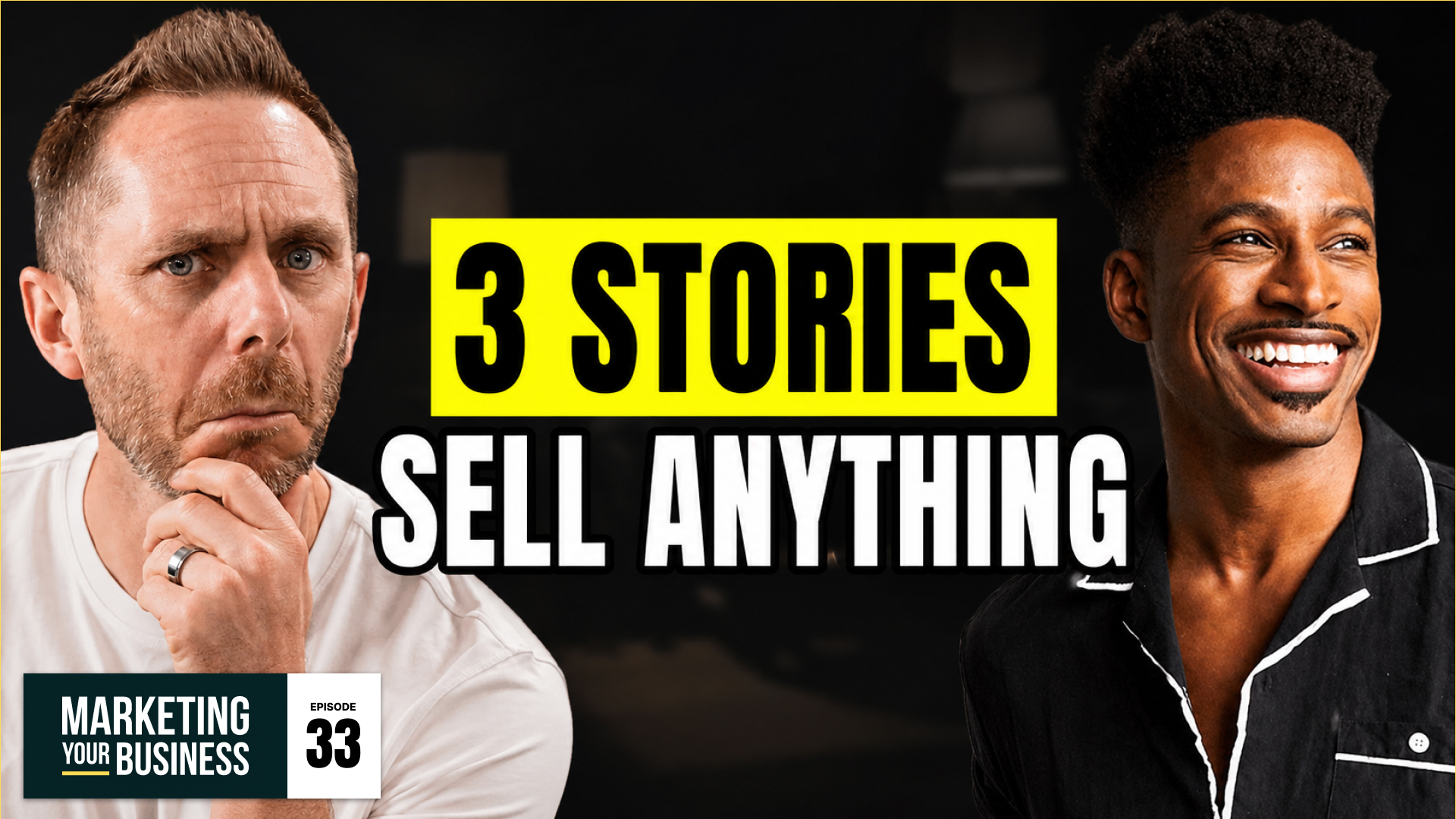
Robert Hartwell Left Broadway to Build a Membership. His Rule: Never Open With Your Best Client Result
TL;DR:
Robert Hartwell joins Stu McLaren to map the three stories an offer needs: core belief shift, quantifiable result, and permission slip.
Each has one slot: belief at attract, result at the conversion event, permission when you share the offer.
His warning: "if you're talking about quantifiable results at the beginning, you've lost them."
The result story that landed: a client whose speaking fee went from $5,000 to $25,000, fully virtual. The room said "I want to be her."
Most storytelling in sales advice is about craft: make the story vivid, land the emotional beat, practice the delivery. Robert Hartwell's point on a recent episode of Stu McLaren's Marketing Your Business is that a good story told in the wrong slot still costs you the sale. He performed on Broadway in Memphis, Motown, and Hello, Dolly! before founding The Broadway Collective, where he created the Hello Broadway membership and grew the business from six figures to multiple seven figures. Listen at podcast.stu.me or watch on Stu's YouTube channel.
Why Does Leading With Results Cost You the Sale?
Because the audience does not yet believe the result is available to them. Open with a client's revenue number and you sound impressive instead of relevant. Robert Hartwell's warning on the episode is blunt: "if you're talking about quantifiable results at the beginning, you've lost them." Belief has to come first.
That is not an argument against results. It is an argument about placement. The same story that gets scrolled past cold can fill a cohort later, once people accept the outcome is possible for someone like them. Sequencing is the part of storytelling in sales most training skips, and it works like how the rest of the funnel is built: every moment has exactly one job.
What Are the Three Types of Stories You Need to Sell an Offer?
Three, in a fixed order. A core belief shift story at the attract stage, when you are getting someone to register. A quantifiable result story at the conversion event itself. A permission slip story at the moment you share the offer. Tell the same three stories in a different order, and the sale does not happen.
Robert's belief for his own audience is "you deserve to be seen." Nobody registers for his free masterclass, let alone buys the 12-month program at the end, without holding that belief first. Yours might be that bodies like theirs belong in a gym, or that a craft can be taught outside an apprenticeship. Same job whether you are selling a membership or filling a workshop.
When Should You Share a Client's Results Story?
At the conversion event, not before. By then the audience already believes the outcome is possible, so a number lands as proof instead of a brag. Robert Hartwell's example is a client who took a $5,000 speaking fee to $25,000, completely virtual. What he heard back from the room was: "I want to be her."
"I want to be her" is the tell. Polite admiration is what the same story earns when it shows up too early. He describes how he builds a room to that point on the episode.
What Is a Permission Slip Story?
A story about a time you gave yourself permission to do the uncomfortable thing. You tell it when you share the offer, because an audience will not grant themselves permission you have not modeled first. Robert Hartwell's own version involves a choice he says left him feeling terrible, and he tells it anyway.
In 2017 he was performing on Broadway when Stu's TRIBE Live came around. He wanted to be in that room badly enough to fake being sick and skip the show. He still tells it, because the audience has to hear that the leap cost him something. Yours might be the certification you paid for yourself, or the job you left to train full time.
Watch or Listen to the Full Episode
The conversation goes further: the membership he built before the coaching program, a reverse of the usual path when moving from coaching into a membership, what he does about keeping members active once they join, and how he protects who gets in ("all money is not good money").
Listen at podcast.stu.me or watch on Stu's YouTube channel.
About this post: The Membership.io team covers episodes of Stu McLaren's Marketing Your Business podcast, pulling out the business lessons worth stealing from the guests who lived them. This one comes from Stu's conversation with Robert Hartwell, founder of The Broadway Collective and creator of the Hello Broadway membership.
Related posts
See more
Laura Phillips Made Six Weeks' Pay in Two Hours
Membership.io Team
October 19, 2026
YouTube for Business: How a Doctor Turned His Channel Into a Book Deal and 11,400 Pre-Orders
Membership.io Team
October 13, 2026
Over 700 People Paid Carrie Green for What Most Creators Give Away Free
Membership.io Team
October 5, 2026
Stay in the loop
Don't miss out on our latest news, tip and content! Join our mailing list and get exclusive tips, tricks and the latest insider hacks.