How to Get Members to Stay for Years (It's Not More Content)

Membership.io Team
How to Get Members to Stay for Years (It's Not More Content)
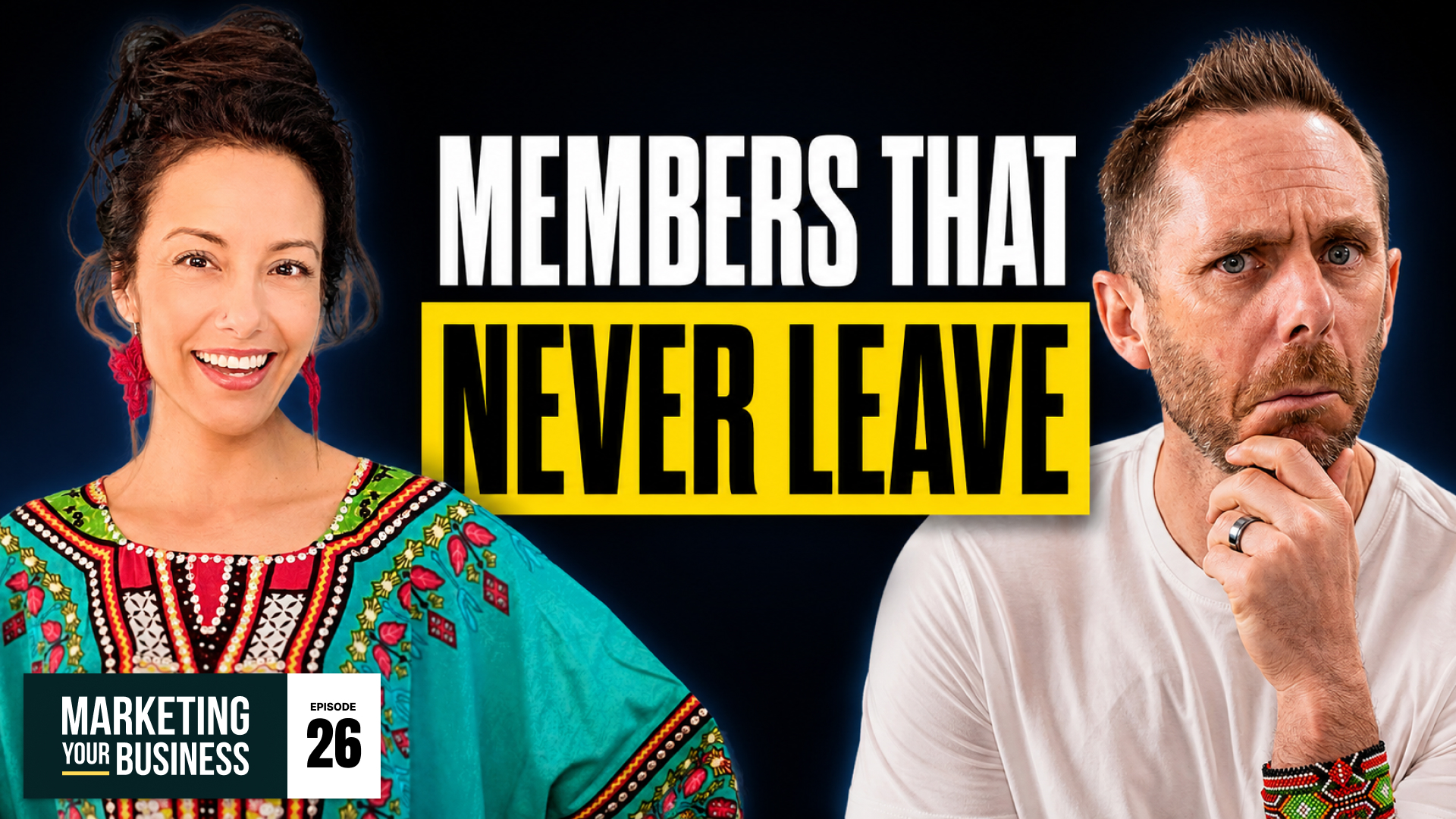
Members stay for years when a membership gives them people, not just more videos. Alesha Yamal built a 26-year belly dance business on that exact insight: when she asked her members what they'd keep if everything else in her membership disappeared, they never picked the video library. They picked the live classes and the community around them. Her playbook, two live sessions a month, a small active Facebook group, off-topic "member clubhouses," and members turned into collaborators, applies to any niche. Content gets someone in the door. Community is why they don't leave.
Most membership owners solve the wrong problem. They notice cancellations climbing and respond by making more content: another module, another bonus, another course tucked inside the same library. Alesha Yamal ran that experiment for years without meaning to, and it taught her the opposite lesson.
Why Do Members Stay in a Membership for Years Instead of Canceling After a Few Months?
Members stay for years when a membership gives them relationships they don't want to lose, not just information they could eventually find somewhere else. Content can be copied. A community that knows a member's name, struggles, and progress cannot. That difference decides whether someone renews in month three or month thirty-six.
Alesha has taught belly dance for 26 years. She got there sideways. After earning a chemistry and environmental engineering degree at Rice, she took a job as an engineer, then got let go from it in what she describes as an ugly way. She put her belongings in storage, lived in a tent for a stretch, and started performing at Renaissance festivals to get by. Teaching came next, then a $20-a-month video library that quietly grew to 40 paying members while she, in her own words, "wasn't doing anything." It took a 2021 conversation to push her toward a structured membership instead of a pile of recordings, a shift covered in more detail in this guide to growing a membership well past the first launch.
Today her Belly Dance Journey membership serves women mostly in their 40s through 70s who will never perform professionally. They're there for confidence, movement, and creative expression. And what keeps them paying month after month has almost nothing to do with how many videos she's uploaded.
Is It the Content or the Community That Makes People Stay?
It's the community. When Alesha polls her members and asks what they'd keep if she stripped away everything else, the answer is never the video library. It's always the live classes and the people in them, a pattern Stu McLaren calls "they come for the content, they stay for the community."
Alesha isn't alone in finding this. Krystal Schouten, another membership owner who built her retention around identity rather than content, discovered the same thing in a completely different niche: members who feel genuinely seen stick around long after they've watched everything in the library. Content gets someone to sign up. Belonging is what keeps them from canceling.
What Makes a Membership Community Sticky?
A sticky membership community rests on a handful of repeatable mechanics: regular live contact, a small and active discussion space, gatherings that go off-topic on purpose, real collaborations, and clear norms that make it safe to show up imperfect. None of these require more content. All of them require more connection.
For Alesha, that looks like:
Two live classes every month, so members see her and each other on a predictable rhythm
A small, active Facebook group where she prompts members to post practice videos and progress photos
Member clubhouses built around activities that have nothing to do with belly dance
Collaborations that turn members into contributors, not just an audience
Explicit permission to be a beginner, on camera, in public
Alesha keeps that Facebook group small and tight-knit on purpose rather than large and quiet. If you're weighing where to put your own community, this breakdown of why some creators keep their community on Facebook groups vs. a dedicated platform walks through the tradeoffs.
What Is a Member Clubhouse and How Does It Improve Retention?
A member clubhouse is an informal gathering built around an activity adjacent to the core topic, not more instruction in it. The goal isn't skill-building. It's letting members see into each other's kitchens, homes, and lives so the relationship goes deeper than teacher and student.
Alesha's first clubhouse came out of a connection with another creator who teaches Turkish cooking. She told her members, "I'm gonna see you in your kitchen." Members got the menu and ingredient list in advance, then spent 90 minutes cooking together over video, mistakes and all. She's since expanded the idea to jewelry-making, craft nights, and a wine-and-chat session, none of which touch belly dance at all.
The payoff, in Alesha's words, is getting to know people "on a different level." Live video already shows her more of members' lives than an in-person studio class ever could, kids, grandkids, pets included (her exact line: "the cat has shown me their butt on screen multiple times"). A cooking clubhouse just extends that. Members watch each other struggle to chop vegetables and come away feeling like co-learners instead of an instructor and her audience.
The same idea travels well outside dance. A fitness coach could run a cooking night. A language-learning membership could host a game night with no vocabulary drills attached. A woodworking or trades community could do a wine tasting or a trivia hour. The activity doesn't need to relate to the niche. It needs to let people be human together, which is a different kind of value than what to put inside a membership beyond a bigger video library.
How Can Collaborating with Another Creator Turn Members into Content Contributors?
Invite a complementary creator to co-produce something with the whole community, then turn what members submit into a shared, professionally finished piece of media. That converts ordinary participation into content members are genuinely proud to have made, and it exposes both audiences to each other.
Alesha did this with a musician friend, Ms. Thea, whose royalty-free tracks she'd used for years. During a 10-day finger-cymbal challenge built around one of Ms. Thea's songs, Ms. Thea suggested editing members' own practice videos into the official music video for the track. The video, Alesha said, wouldn't be judged on "who's the best dancer, the best seller, who has the best costume," but on who embodied the joy of the event. Members filmed themselves dancing on a downtown Houston rooftop, in a mountain field, beside a fountain, and sent everything in.
The result went both directions. Members got to be part of something bigger than a practice log. Ms. Thea picked up new followers and music sales from people tagging her in their submissions. Alesha's own take on why this works: "I'm a firm believer in a rising tide floats all boats." That framing turns other creators in your space from competitors into collaborators, and it's the same instinct behind building a community members want to talk about.
What Does "Embrace the Suck" Mean and How Does It Build Psychological Safety in a Community?
"Embrace the suck" is Alesha's shorthand for a simple norm: post the first take, not the polished one. It tells members that struggle is expected, not something to hide, which lowers the bar for participation and gives nervous members permission to show up unfinished.
During that same challenge, she told members not to record 20 takes and post the best one. "Please do not take 20 videos to post the best one. Post the first one," she said. Several members who'd done the challenge three years in a row without ever posting a video finally did, and the group answered with encouragement instead of critique. The same permission carries into live classes: cameras off is fine, and people tend to turn them on once they notice someone else "looks a little lost too."
Being explicit about who belongs works the same way. Alesha's members are mostly women in their 40s through 60s and beyond, many retired, many navigating surgeries or body changes that don't match the usual dance-class image. When a troll asked online whether she was "a little old for this," she turned it into content asking "are you ever too old to belly dance?" It struck a nerve and got real traction, because it named exactly who was already in the room and welcomed more of them. Whatever the niche, fitness, art, language, a trade, the same move works: say plainly who belongs, and normalize the mess of learning in public.
What Is Borrowed Influence and How Does It Help a Membership Grow Without Ad Spend?
Borrowed influence means teaching or contributing in front of an audience someone else already built, instead of trying to attract that same audience from scratch. You trade time and expertise for a few minutes in front of people who are already interested.
When Stu asked Alesha whether her business had a traffic problem, a conversion problem, or a retention problem, she agreed it was mostly traffic: get her in front of more of the right people, and the rest tends to follow. He pointed to a member of the Membership.io community named Blake, a speaker who used to get paid a flat fee to emcee events. Instead, he started trading his emcee fee for 10 minutes of teaching time in front of the crowd, plus a call to action for a free resource. One event, roughly 2,500 paying attendees, built him a list of more than 400 buyers. Alesha's own read on the strategy: "it doesn't matter why they've gathered. It just matters that they've gathered." Retention keeps the members already inside the door. Borrowed influence is how you find the next ones without spending on ads.
Where Community Fits Into Your Own Membership
None of this replaces the fundamentals. Members still need a clear path forward and a working system behind the scenes, and that's the full system for reducing churn beyond community alone. But content alone doesn't sell, or keep, memberships anymore; community is what makes members stick around long enough to actually use what they've paid for.
If a membership still feels like Alesha's early days, just a video library with a price tag, the fix isn't a bigger library. It's a couple of live touchpoints, a small and active discussion space, one clubhouse built around something completely unrelated to the topic, and clear permission for members to show up messy.
Alesha's closing advice sums up how she's built all of it: "Just do it, and do it as messy as you possibly can." Messy progress, she says, is empowering precisely because it gets something real in front of real people faster than waiting for a perfect plan ever would.
Membership.io Hubs bring content and community into one place, so live classes, discussion, and events can live where members already show up instead of scattered across five different tools. If retention has felt like a content problem, it might be worth looking at what's happening between the videos instead.
Stay in the loop
Don't miss out on our latest news, tip and content! Join our mailing list and get exclusive tips, tricks and the latest insider hacks.