From Retail Burnout to Recurring Revenue: How Two Shop Owners Escaped the One-Time Sale Trap

Membership.io Team
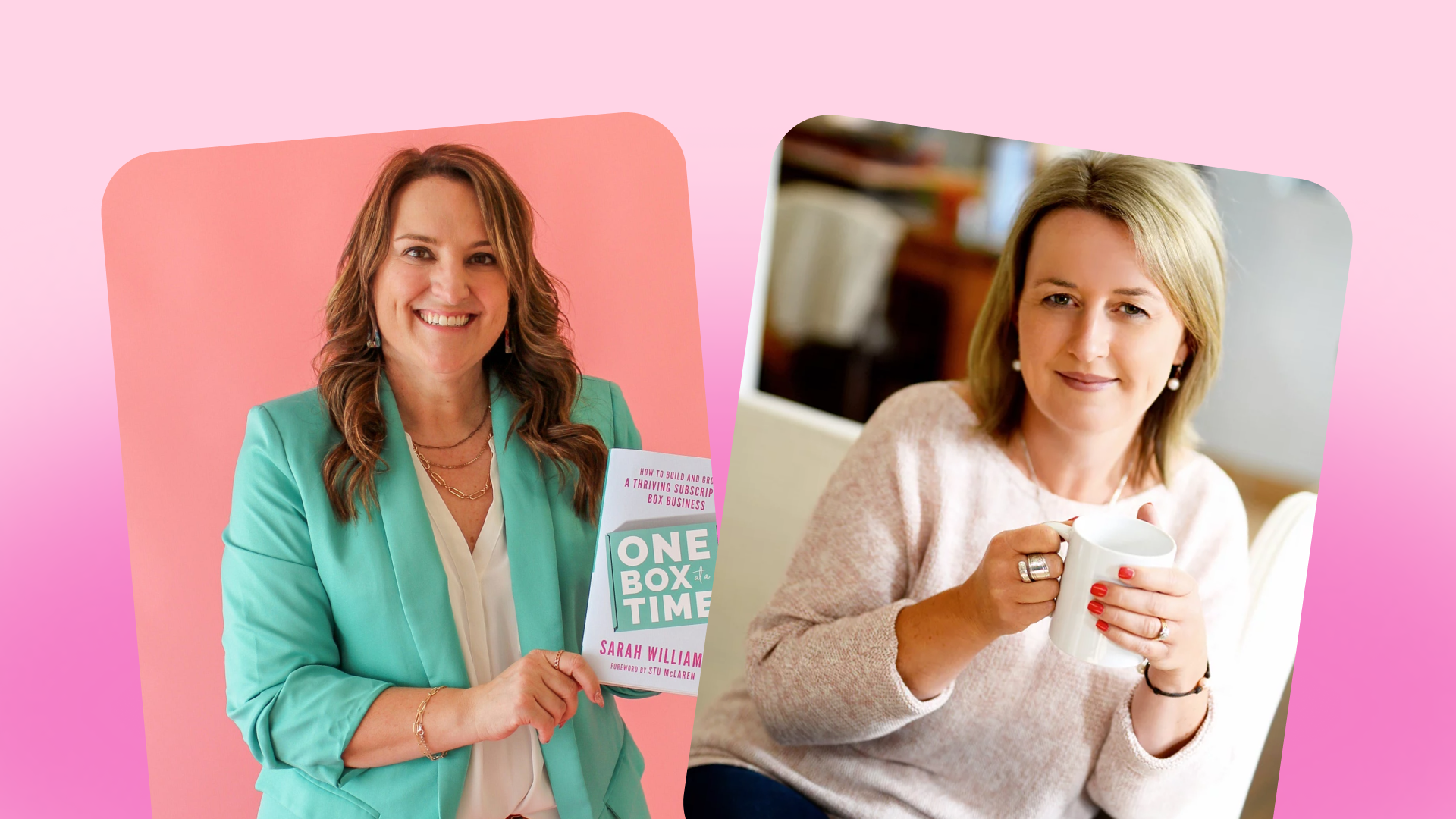
TL;DR: Retail store owners build recurring revenue by layering a membership or subscription onto the business they already run, instead of chasing new buyers every month. Two real shop owners did exactly that. Sarah Williams added a monthly subscription box to her monogram shop and it sold out month one, eventually landing her on the Inc. 5000. Wendy Batten turned 20 years of paint-retail experience into a coaching membership she launched with a single Facebook post. You don't need new technology or a complicated launch. You need the right model for what you already have.
You opened your store because you love what you sell. But somewhere between the 60-hour weeks and the constant scramble for new customers, the joy started fading.
The reality is that retail burnout is everywhere. Roughly a third of small business owners work more than 50 hours a week, and a quarter top 60. And even with all those hours, you're still riding the feast-or-famine rollercoaster of one-time sales.
What if you could predict next month's income instead of hoping for it?
Two retail store owners found a way. One sells monogrammed products. The other coaches fellow retailers. Both built recurring revenue that changed everything, and neither needed fancy technology or a complicated launch to do it.
How Did Sarah Williams Turn a Struggling Monogram Shop Into an Inc. 5000 Business?
Sarah Williams added a monthly subscription box to her existing monogram shop, turning unpredictable one-time sales into recurring revenue. Members receive 3-4 handpicked items each month, including at least one monogrammed piece. The box sold out its first month, gave her predictable income to plan around, and helped grow the business onto the 2023 Inc. 5000 list.
For nine months before that pivot, Sarah couldn't pay herself a single dollar from her shop in Wichita Falls, Texas. Meanwhile, her house flooded eight times in three years. She was working constantly, battling "mom guilt," and watching her dream feel more like a trap.
The problem wasn't her products. People loved what she created. The problem was the business model itself: every month started at zero, dependent on new customers walking through the door.
Then Sarah tried something different. She launched The Monogram Box, a monthly subscription where members receive 3-4 handpicked items, including at least one monogrammed piece.
It sold out the first month.
That single pivot created a cascade of changes. With predictable monthly revenue coming in, Sarah could finally plan ahead. She hired employees. She opened a new location. She bought her dream home. And in 2023, Framed by Sarah landed on the Inc. 5000 list of fastest-growing companies in America. She later turned that momentum into a repeatable growth engine, a paid 5-day launch event that converted at 43%.
Sarah didn't abandon her store. She layered recurring revenue onto what she already did well. Same expertise, same products, different revenue structure.
How Did Wendy Batten Build 100+ Members With Just a Facebook Post?
Wendy Batten turned 20+ years of paint-retail experience into a coaching membership and launched it with a single Facebook post. No website, no launch sequence, no complicated tech. Other retailers kept asking how she built her store, so she packaged that expertise into a paid monthly membership: The Retailer's Inner Circle, now 100+ members strong.
Wendy built a successful paint retail store over more than two decades. As her reputation grew, other retailers started asking the same question: "How did you do it?"
She started coaching them one-on-one. But trading time for money in coaching felt exactly like trading time for money in the store. She'd escaped one grind only to create another.
Wendy's solution was radically simple. She announced a membership to her audience with a Facebook post. No fancy website. No elaborate launch sequence. No complicated tech setup.
That post became The Retailer's Inner Circle, with members paying monthly for access to her coaching, community, and expertise. She'd moved from trading hours to packaging her expertise into ongoing coaching and community.
Today Wendy lives in her dream cottage by the sea. Her membership business runs on her schedule, not the demands of individual clients.
When people keep asking "how did you do it?", that's a signal. Your knowledge has value, and recurring access to your expertise is worth paying for.
Why Does Recurring Revenue Change Everything for Small Retailers?
Recurring revenue replaces the monthly scramble for new buyers with predictable income from customers you already serve. That predictability lets retailers plan, hire, and invest instead of starting from zero every month. It's also far cheaper, because acquiring new customers costs 5-25x more than retaining existing ones.
The math behind subscriptions explains why both Sarah and Wendy transformed their lives.
Subscription businesses grow 4.6x faster than S&P 500 companies. And a 5% increase in customer retention can boost profits 25-95%.
Traditional retail forces you to constantly hunt for new buyers. Memberships and subscriptions flip that equation. You serve the same customers month after month, building relationships instead of restarting from zero.
The subscription box market hit $42.5 billion in 2025 and is projected to top $124 billion by 2034. Yet most traditional retailers still haven't added a subscription, which means most of your competitors haven't figured this out yet.
Predictable income changes how you make decisions. Sarah could hire employees because she knew the revenue was coming. Wendy could move to her dream cottage because her income didn't depend on being physically present.
What's the Difference Between a Product Subscription and a Knowledge Membership?
A product subscription ships physical goods your customers want on repeat, like Sarah's monthly box of curated and monogrammed items. A knowledge membership packages your expertise into ongoing coaching, community, or content, like Wendy's coaching circle. One has inventory and shipping. The other has neither. Both create recurring monthly revenue.
Here's the decision framework, and it comes down to one question: do you sell something people want repeatedly, or do you know something people keep asking about?
The product subscription model (Sarah's approach) works when you sell physical goods your customers want regularly. You're curating products and shipping them monthly. Subscription box margins often beat typical retail margins significantly.
The knowledge membership model (Wendy's approach) works when people ask how you do what you do. You're packaging your expertise into ongoing coaching, community, or content. There's no inventory, no shipping, just your knowledge delivered consistently.
Some retailers do both. The right choice depends on what you already have: products people want repeatedly, or expertise others want to learn.

Which Membership Model Fits My Retail Business, Subscription Box or Coaching Community?
Choose the subscription box if you sell physical products people reorder or love receiving on a schedule. Choose the coaching community if customers and peers keep asking how you do what you do. If you have both repeat products and sought-after expertise, you can run both. Match the model to your strongest asset, not the trend.
It helps to see how varied this can look. There are real membership site examples across dozens of industries, from product boxes to coaching to community-only models, and almost none of them started with a big platform or a complicated launch.
Still unsure which way to go? Working through how to come up with a winning membership idea helps you pick the model that matches your strengths instead of copying someone else's.
How Do You Start a Membership or Subscription Without a Fancy Launch?
You start small, with the people you already serve. Wendy's single Facebook post proves you don't need a website or a tech stack to launch. Announce one clear offer at one price to your existing customers, give early members a founding rate, and add it on top of your current business instead of replacing anything.
Here's what actually matters:
Start with who you already know. Both Sarah and Wendy launched to existing audiences, not strangers. Your current customers and followers are your first members.
Keep it simple. One offering, one price, one clear value proposition. Complexity kills launches.
Price for momentum. Your first members validate the idea and create success stories. A founding member approach, where early adopters get a locked-in rate, rewards them for believing in you first.
Layer, don't replace. Neither Sarah nor Wendy abandoned their original business. They added recurring revenue on top of what already worked.
The retailers who struggle are the ones waiting for perfect conditions. The ones who succeed are the ones who start.
Frequently Asked Questions
How much does it cost to start a subscription box for a retail store?
You can start a retail subscription box for very little upfront. Use products you already stock, buy packaging in small batches, and open with a founding group rather than a warehouse of inventory. Your biggest early costs are shipping supplies and the boxes themselves, both of which scale only as members join.
What products work best for a retail subscription box?
The best subscription box products are items people enjoy receiving on repeat or that pair naturally with a theme. Sarah's box works because it bundles handpicked items around one monogrammed piece. Curate around a clear promise: a seasonal surprise, a bestseller rotation, or a themed mix your customers already love buying.
Can a brick-and-mortar store realistically make money from subscriptions?
Yes. A subscription layer gives a physical store predictable monthly income on top of walk-in sales, which steadies cash flow through slow seasons. Sarah ran a brick-and-mortar monogram shop and added a subscription box that sold out month one. The store and the subscription strengthen each other rather than compete.
Ready to Build Recurring Revenue?
You have two options. Keep trading time for one-time sales and hoping next month is better. Or build something that compounds.
Sarah couldn't pay herself for nine months. Now she's on the Inc. 5000.
Wendy was stretched too thin coaching one-on-one. Now she lives by the sea with 100+ members.
Both started with what they already knew and who they already served. You can too.
If you're ready to build a membership business, start with the simplest version. A subscription box of your bestsellers. A coaching community for the people who keep asking how you do it. Pick the model that matches your strengths, then launch it to the customers you already have.
Membership.io gives you everything you need to start or grow your membership in one place, so you can spend your time on members instead of piecing tools together. The retail grind doesn't have to be your only option. Recurring revenue is waiting, and you can start your free trial today.
This post draws on the real, verifiable journeys of two retail operators, Sarah Williams of Framed by Sarah and Wendy Batten of The Retailer's Inner Circle, alongside published industry data. Written by the Membership.io team, the membership owners who built the dedicated membership platform for creators and small business owners.
Related posts
See more
Black Friday Marketing Strategy for Creators: The Offer Playbook for Coaching, Courses, and Memberships
Membership.io Team
October 8, 2026

You Don't Have an Audience Problem. You Have an Offer Problem.
Membership.io Team
September 24, 2026

Welcome Email Sequence: How to Keep New Subscribers From Forgetting You in 14 Days
Membership.io Team
August 20, 2026
Stay in the loop
Don't miss out on our latest news, tip and content! Join our mailing list and get exclusive tips, tricks and the latest insider hacks.