Why Your Membership Site Needs a Mobile App (and What It Won't Fix)

Membership.io Team
Why Your Membership Site Needs a Mobile App (and What It Won't Fix)
TL;DR: A mobile app makes your membership easier to reach, and easier to reach means easier to keep. Members rarely cancel because they stopped liking your content. They cancel because they stopped showing up. A branded app fights that drift in three ways: deeper connection, because community moves to the phone where members already chat; daily awareness, because your icon and push notifications keep you top-of-mind; and better delivery, because everything you sell lives in one branded place. Push alone is tied to 190% higher retention in a 63-million-user study. Just know what an app fixes, and what it can't.
Open your phone and look at your home screen. Netflix, Spotify, your bank, your group chat, maybe a meditation app. Now ask an uncomfortable question: where's your membership in your members' version of that screen?
For most creators, the honest answer is "buried in a browser tab on their laptop they closed three weeks ago." That gap matters more than most retention advice admits. So let's make the case properly, with real data, and with an honest section about what an app won't do for you.
What Is a Membership App?
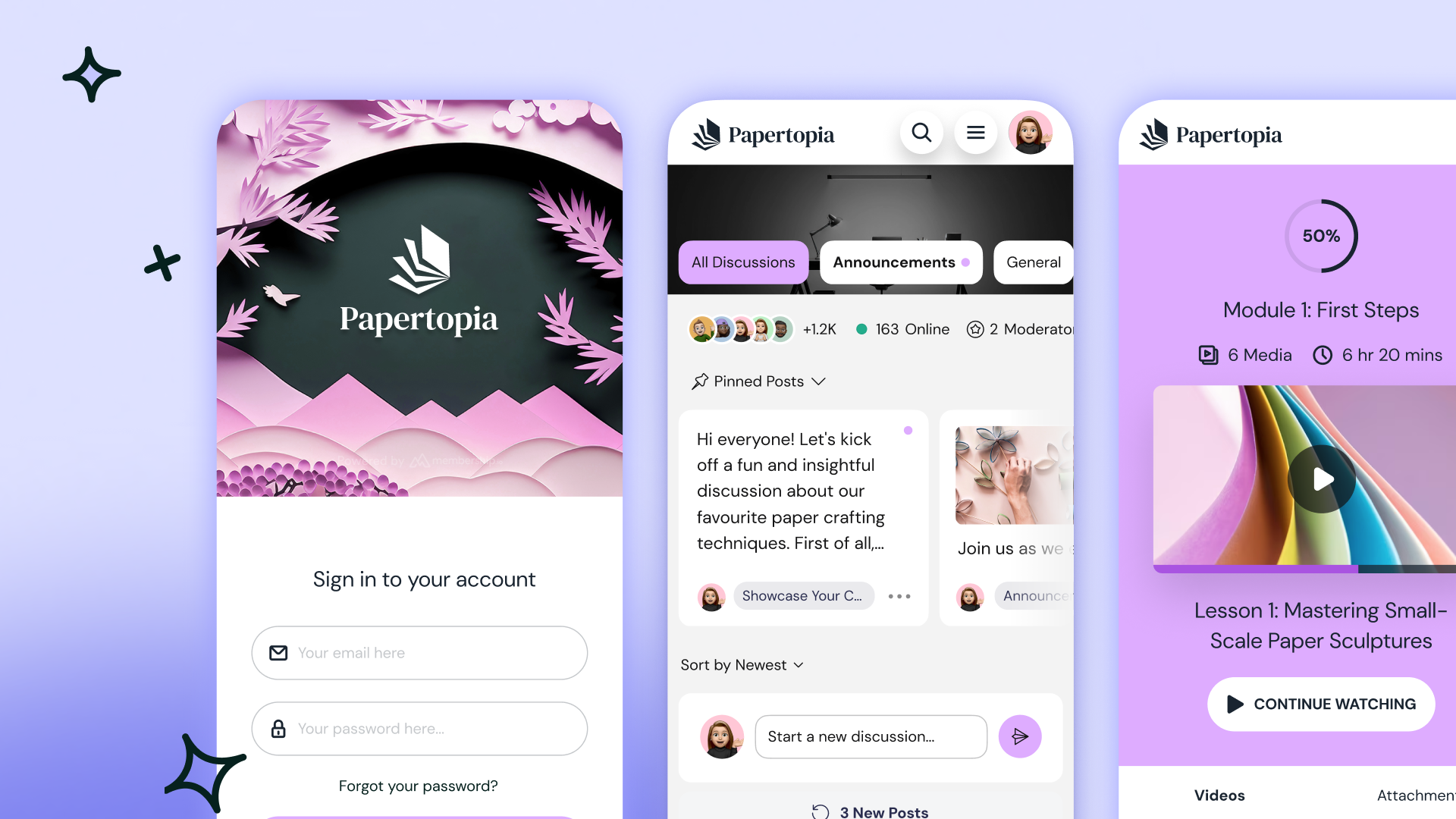
A membership app is a branded iOS and Android app that gives your members instant access to everything inside your membership: video, audio, PDFs, course content, and community. Members log in with the same account they use on your website, and the content stays in sync automatically. It's your existing membership, delivered the way people actually use their phones.
The key word is "branded." This isn't your membership squeezed inside someone else's app. It's your name, your icon, and your colors sitting in the App Store and Google Play, then living on your members' home screens.
One distinction worth clearing up early, because it confuses a lot of creators: this is not an app for building courses. It's an app for your members to consume what you've already built.
Why Do Members Cancel Memberships They Still Like?
Most members don't cancel because your content got worse. They cancel because they stopped showing up. Logins slip, the habit fades, and a month later the renewal charge feels like paying for something they never use. Churn is usually a drift problem before it's ever a value problem, and friction speeds up the drift.
You've probably felt this yourself with a gym. The gym didn't change. Your visits did, and then the monthly fee started to sting.
Memberships work the same way, which is why the best membership retention strategies focus on engagement long before the cancel button. The dangerous part is that drift is silent. Your dashboard shows steady revenue while login frequency quietly falls, and by the time someone cancels, the real decision happened weeks earlier.
This is where access friction becomes a retention issue. Every extra step between a member and their next win, finding the URL, waiting for the login page, typing a password on a phone keyboard, is a small exit ramp. None of them feel like a big deal. Together, they're often the difference between a member who checks in daily and one who drifts away.
Is a Mobile-Responsive Website Enough for a Membership Site?
A responsive website is necessary, but for most memberships it's no longer enough on its own. Mobile devices now account for 50.29% of worldwide web traffic, ahead of desktop, and a responsive site still asks members to find you, load a page, and log in before they get any value. An app collapses all of that into one tap.
The numbers behind this shift are bigger than most creators realize. In the US, 91% of adults own a smartphone, and 16% are smartphone-only internet users who don't rely on home broadband at all. For a meaningful slice of your audience, their phone isn't a second screen. It's the only screen.
And phone time overwhelmingly happens inside apps, not browsers. People spent 5.3 trillion hours in mobile apps in 2025, roughly 3.6 hours per day per user. Your members already have a daily app routine. A responsive website asks them to step outside it. An app puts your membership inside it.
That's the real difference. It's not about how your content looks on a small screen. It's about how many steps stand between a member and pressing play.
Do Push Notifications Actually Increase Engagement and Retention?
Yes, and the data is dramatic. In a study of 63 million app users, people who received push notifications in their first 90 days showed 190% higher retention than those who received none. Frequent messaging increased app retention 3x to 10x. "Push" is a channel you own that lands on the lock screen, not in a crowded inbox.
The flip side of that study is just as telling. Only 5% of new app users who receive no messages are still active 90 days after install. Silence kills the habit, even when the product is good.
Email marketing for your membership still matters, but it competes with everything else in the inbox. A push notification is different: new training dropped, the live call starts in an hour, someone replied to your post.
Used well, push isn't marketing. It's service. It's fulfilment. It's progress for your members. Each notification closes the loop between "something happened for you" and "you saw it." Repeated over weeks, that loop builds the check-in habit your retention depends on.
What Are the Benefits of a Mobile App for Your Membership?
A mobile app strengthens your membership in three ways: connection, awareness, and delivery. Community conversation moves to the phone where members already chat. Your icon and notifications keep the membership in daily view. And everything you sell, courses, video, audio, PDFs, and community, arrives in one branded place, synced with the web.
How Does an App Deepen Member Connection?
Community runs on small, frequent touches, and small touches happen on phones. A quick reply from the train, a photo of a finished project, a question posted between meetings. On a web-only membership, most of those moments never happen, because nobody opens a laptop to leave a two-line comment.
An app puts those threads and replies in the same pocket as the group chat, one of the most practical steps toward creating a stickier community. Connection deepens in both directions, member to member and creator to member. And if you're turning a free community into a paid membership, the app is where that daily back-and-forth actually lives.
How Does an App Keep Your Membership Top-of-Mind?
Your branded icon on the home screen is passive awareness. Members see it every time they pick up their phone, and that daily glimpse keeps the membership in mind during the busy stretches when drift usually starts. Push notifications add the active layer, reaching members the moment something happens for them.
Both are attention you own. A feed or an inbox is attention you rent, with an algorithm deciding who sees what, which is a big part of why creators are leaving Facebook Groups for spaces they control. Your icon competes with nobody. It just sits there, quietly reminding members you exist.
How Does an App Improve Content Delivery?
An app turns the phone into a better delivery vehicle for everything members paid for, all in one organized hub that stays synced with your web version. Same login, same content, with search to find anything fast. You're never managing two libraries.
What that looks like depends on the niche. A fitness member queues a workout audio walking into the gym. An electrician pulls up a PDF checklist on a job site. A coaching client taps a push reminder and lands in the live call. Different memberships, same effect: the content shows up where the member already is.
There's a quieter benefit threading through all three. Stu McLaren has long taught that retention follows progress, which is why mapping the member journey matters so much. An app doesn't change that journey. It shortens the distance between a member and their next step on it.
What's the Difference Between a White Label App and Building a Custom App?
A custom app is built from scratch by developers, which is why quotes start around $20,000 and often climb into six figures. A white label app uses proven, ready-built app infrastructure wrapped in your branding and connected to your existing membership content. You get your own app in both stores without funding a software project.
This distinction matters because most of the "skip the app" advice you'll find online was written with custom development in mind. Under that math, the skeptics were right. Almost no creator should spend $20,000 or more building and maintaining their own software.
But that's not the decision on the table anymore. White label apps changed the economics the same way website builders did for websites: you stopped hiring developers and started configuring something that already works. The old objection is arguing with a price tag that no longer applies.
Two realities are still worth knowing before you jump in. Your app is only as good as the content behind it, so make sure what to include in your membership site is polished before you put it in members' pockets. And Apple and Google review every app before it goes live, so build a few weeks of lead time into your launch plan.
What Won't a Mobile App Fix?
An app removes friction, but it can't create value that isn't there. It won't fix content members don't want, a community nobody posts in, onboarding that leaves new members lost, or an offer that doesn't deliver what you promised. An app amplifies the membership you already have, good or bad.
No vendor wants to tell you that, but it's the truth, and skipping it leads to expensive disappointment. If members aren't logging in on the web because the content misses the mark, an icon on their home screen won't change their minds. Friction wasn't the problem. The experience was.
There's a simple gut check here. If your members love what's inside but engagement dips between sessions, an app will likely move the needle, because access is your bottleneck. If engagement is flat even among members who do log in, fix the experience first. Tighten your membership onboarding strategies so new members get an early win, and focus on selling a membership on experience and community, not just content. Then make that experience easy to reach.
Get the order right and the two compound: a membership worth opening, made effortless to open.
Your Membership, One Tap Away
Your members aren't less interested than they used to be. Their attention just lives somewhere specific: on a phone, inside apps. A web-only membership asks them to leave that world every time they want value from you. A branded app meets them in it, deepening connection, keeping you in daily view, and delivering everything they paid for, while push notifications keep the habit alive between visits.
If you're weighing whether an app belongs in your membership's future, you can see how a white label membership app works at membership.io/mobile-app. And if you're not ready yet, start with the gut check above. Your retention numbers will tell you when it's time.
Related posts
See more
Black Friday Marketing Strategy for Creators: The Offer Playbook for Coaching, Courses, and Memberships
Membership.io Team
October 8, 2026

You Don't Have an Audience Problem. You Have an Offer Problem.
Membership.io Team
September 24, 2026

Welcome Email Sequence: How to Keep New Subscribers From Forgetting You in 14 Days
Membership.io Team
August 20, 2026
Stay in the loop
Don't miss out on our latest news, tip and content! Join our mailing list and get exclusive tips, tricks and the latest insider hacks.